From PET Resin to Bottle: A Professional Guide to PET Preform Production, Quality Control, and Common Defects
2026/09/29
This article explains the PET preform production process from resin preparation and injection molding to quality inspection and bottle manufacturing. It also reviews common preform defects, quality-control criteria, mold performance, light weighting, and the key factors industrial buyers should evaluate when selecting a reliable PET preform supplier.
The quality of a PET bottle begins long before the bottle itself takes shape. Many of the characteristics later seen in the final package—including appearance, strength, weight, dimensional stability, and production performance—are determined during the production and design of the PET preform.
For beverage and food manufacturers, a preform is far more than a simple plastic component placed inside a blow-molding machine. Weight consistency, neck-finish accuracy, thread quality, transparency, injection-gate condition, dimensional stability, and even packaging and transportation can influence downstream production.
Understanding PET preform production, quality-control procedures, and the most common manufacturing defects therefore allows industrial buyers to evaluate preforms based not only on price and weight, but also on their actual performance within the production line.
How Are PET Preforms Manufactured?
The PET preform manufacturing process can be summarized in several key stages:
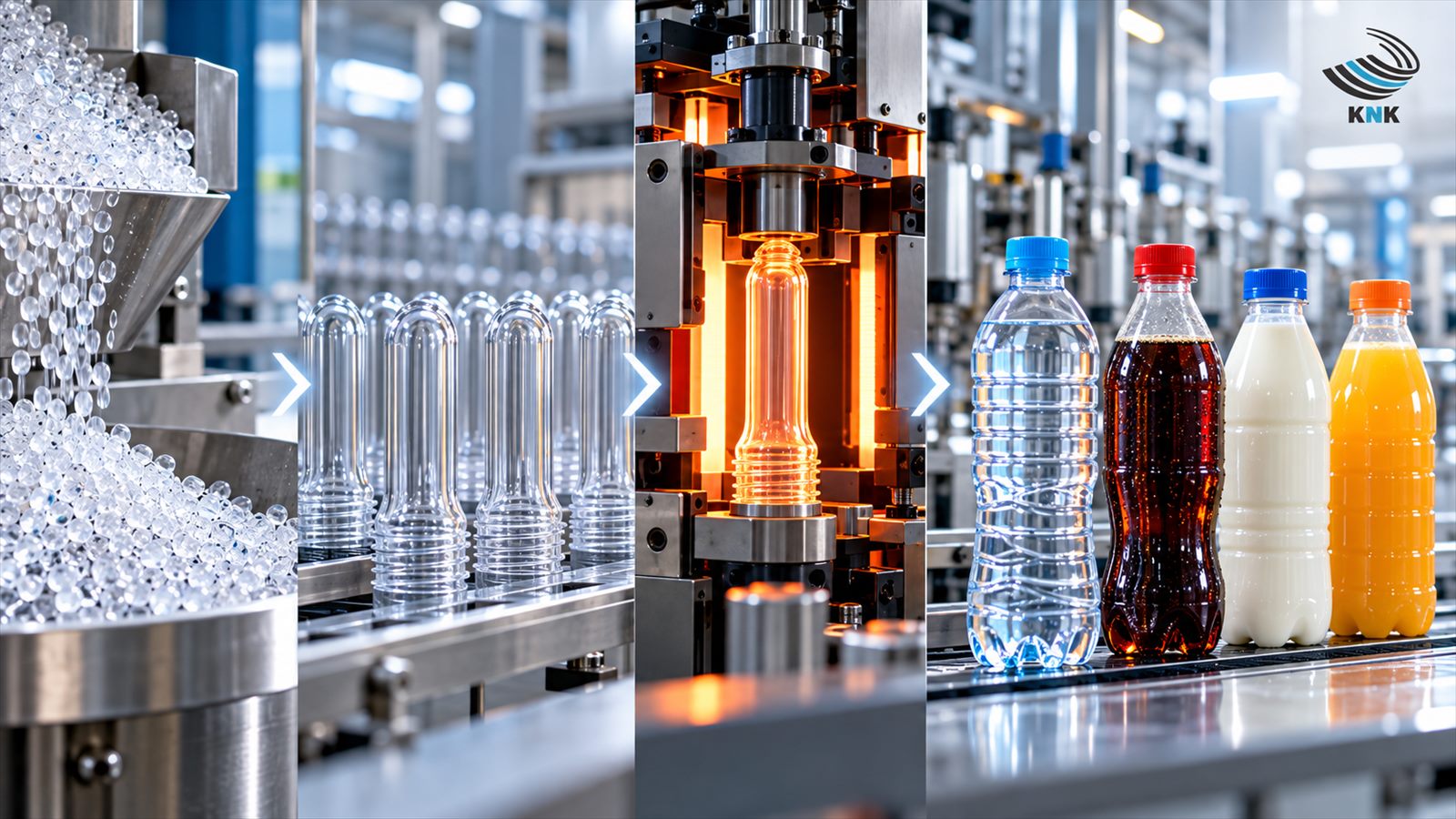
PET resin → material preparation and drying → melting and injection molding → preform cooling → quality inspection → packaging → bottle blow molding
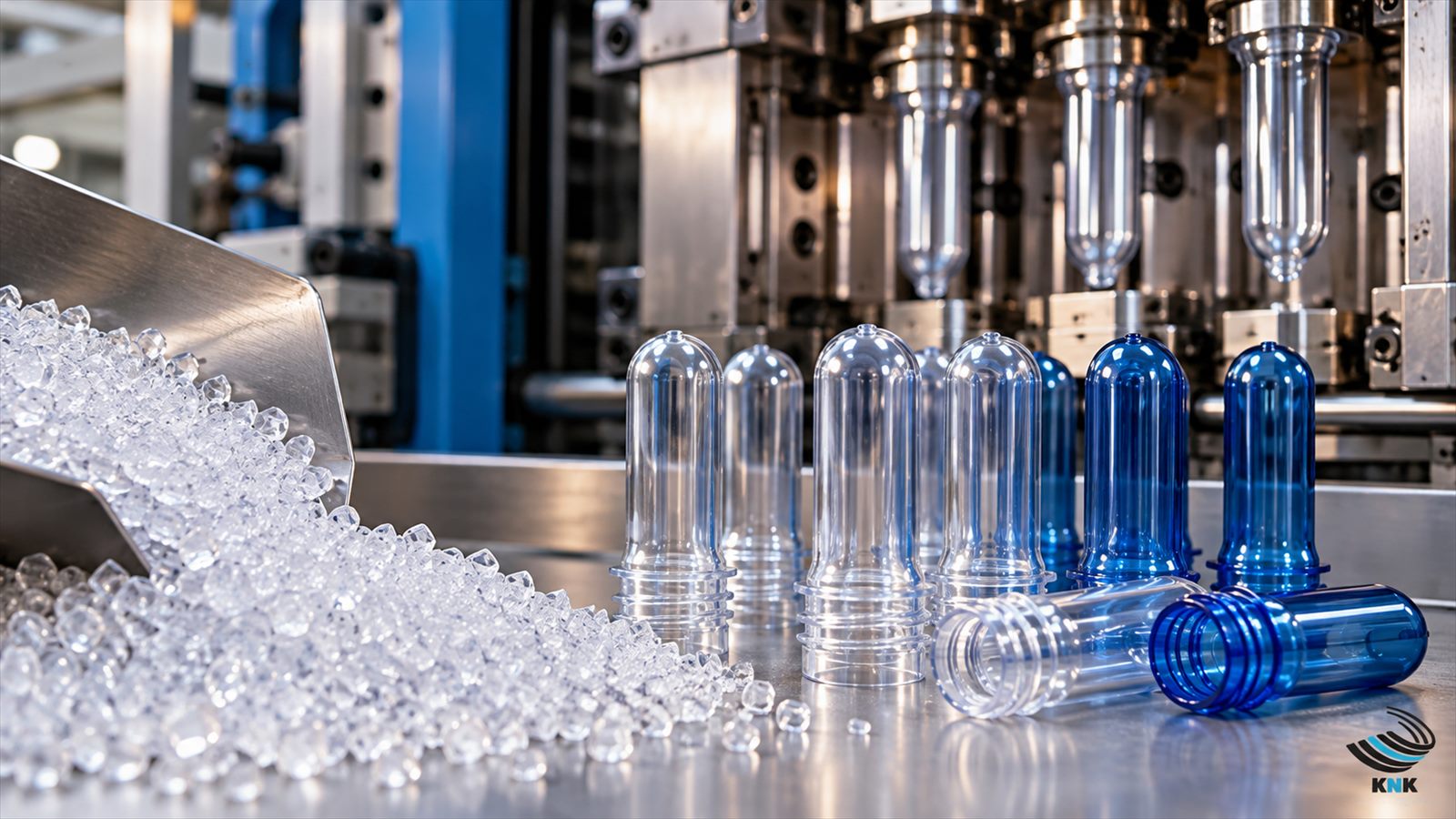
PET resin must first be properly prepared before entering the injection-molding stage. The material is then melted and injected into precision molds, where the preform body, neck finish, threads, and support ring are formed.
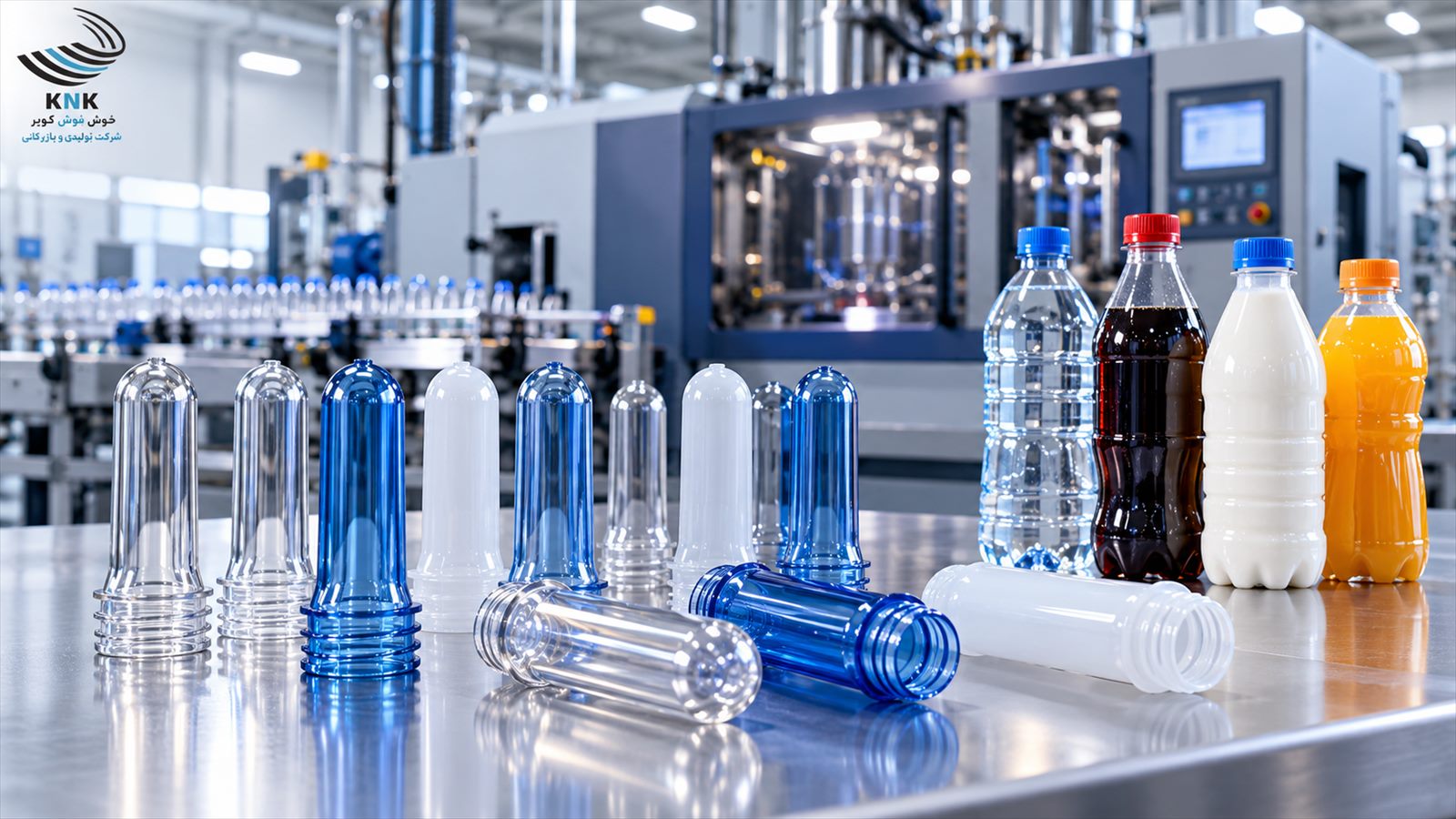
After cooling and inspection, approved preforms are packed for storage or transportation. At a later stage, they are reheated and transformed into finished bottles through stretch blow molding.
PET Resin Preparation: Where Quality Begins
Why Does PET Resin Quality Matter?
Consistent preform production starts with consistent raw material.
PET resin used in industrial production must be suitable for the intended application and stored under appropriate conditions. Contamination, excessive moisture, or significant variation in raw-material properties can affect processing stability and the quality of the finished preform.
For large-scale manufacturing, the goal is not simply to produce a good batch once. The material should behave predictably across repeated production cycles.
Why Is Moisture Control Important?
PET can absorb moisture from the surrounding environment. If excessive moisture remains in the resin before processing, it may negatively affect the material during melting and injection molding.
For this reason, controlled drying is an essential part of PET processing.
The Role of Drying Before Injection Molding
Drying prepares the PET resin for a more stable manufacturing process. Temperature, drying time, and airflow should be controlled according to the production system and material specifications.
In professional preform manufacturing, the drying stage should therefore be considered part of the overall quality-control process rather than merely a preliminary operation.
PET Preform Injection Molding
How Is PET Injected into the Preform Mold?
After preparation, PET resin enters the injection unit, where it is melted and injected into the mold cavities.
During this stage, the preform body, neck finish, threads, and other critical features are formed.
One important distinction is that the preform body will later be stretched and expanded during bottle blowing, while the neck finish generally retains the geometry created during injection molding. This is why dimensional accuracy around the neck and thread area is particularly important.
How Do Injection Conditions Affect Preform Quality?
PET preform quality depends on the interaction of several process variables rather than a single parameter.
Injection pressure, melt conditions, cycle time, cooling performance, mold condition, and processing stability all contribute to the final result.
Improper processing conditions may cause incomplete filling, appearance defects, dimensional inconsistencies, or problems around the injection gate.
Why Is the Preform Mold So Important?
A high-quality mold is expected to reproduce the same geometry consistently over a very large number of cycles.
Industrial customers do not need only one perfect preform; they require thousands or millions of units with stable dimensions and predictable performance.
This repeatability is one of the fundamental differences between laboratory-scale success and reliable industrial manufacturing.
PET Preform Design: Where the Future Bottle Takes Shape
How Is Preform Weight Determined?
Preform weight should be selected according to the final bottle volume, bottle geometry, intended application, required mechanical performance, and production conditions.
A heavier preform is not automatically better. Excessive material increases resin consumption and cost, while reducing weight too aggressively may reduce the processing window or compromise final bottle performance.
The objective should therefore be optimization rather than simply minimizing weight.
How Does Preform Wall Thickness Affect the Bottle?
During stretch blow molding, the preform is heated, stretched, and expanded inside the bottle mold.
The material originally present in the preform must be distributed across the walls and base of the finished bottle. For this reason, preform geometry and material distribution can significantly influence final wall-thickness distribution.
Why Is Neck-Finish Design Critical?
The neck finish is the connection point between the bottle and closure.
Thread geometry, sealing surfaces, neck diameter, and other dimensions must be compatible with the closure and capping equipment.
A dimensional problem in this area may lead to sealing difficulties even when the rest of the preform appears visually acceptable.
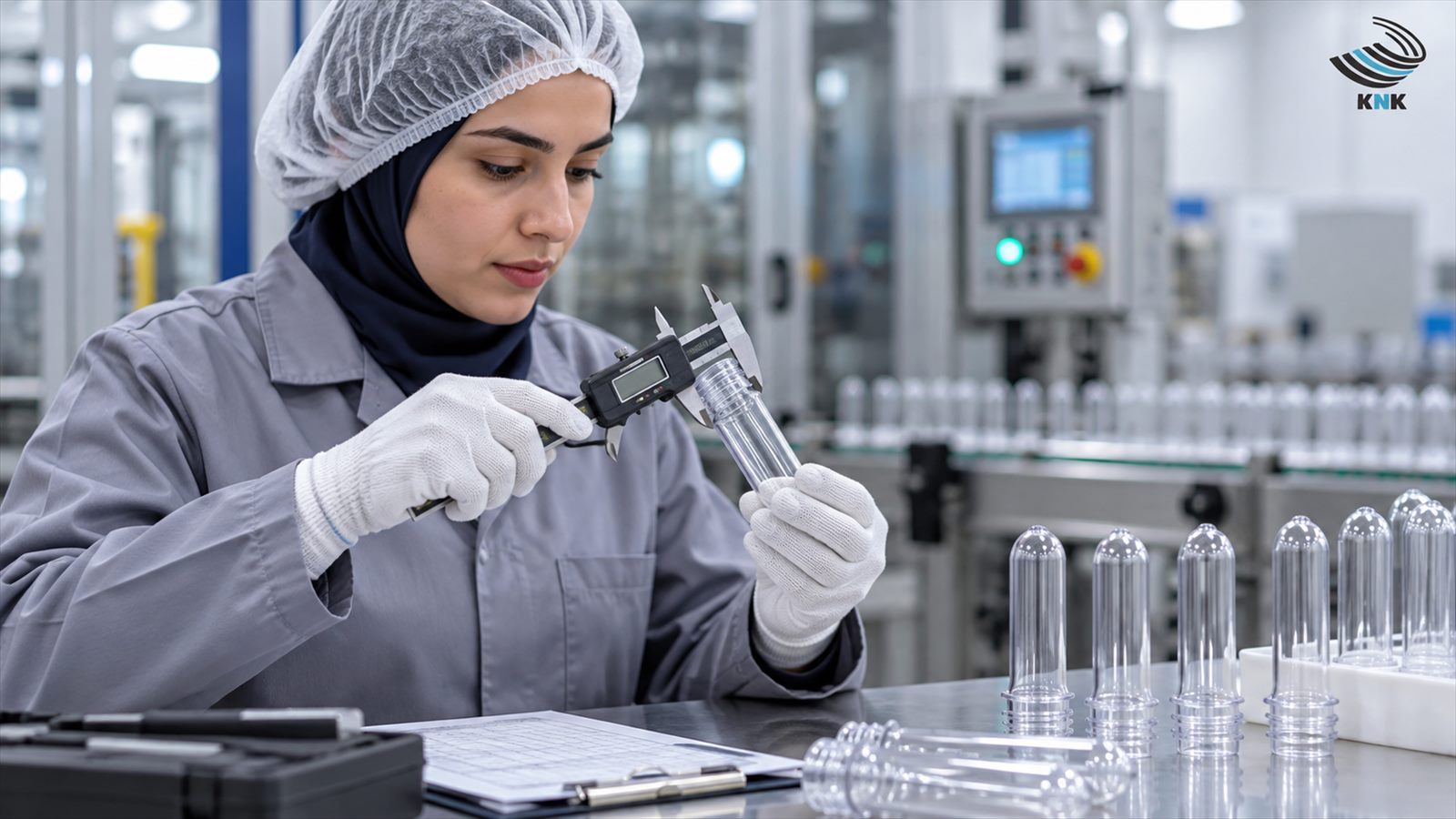
PET Preform Quality Control: What Should Be Inspected?
PET preform quality control should go beyond a simple visual check.
Important inspection points may include:
Preform Weight Consistency
Weight stability can help indicate repeatable production conditions. Significant variation within the same product specification should be investigated.
Neck Dimensions
Critical diameters, heights, and neck-finish geometry must remain within the required tolerances to ensure compatibility with closures and production equipment.
Thread and Sealing Surface Inspection
Incomplete threads, flashing, deformation, or defects around the sealing surface can cause downstream capping and sealing problems.
Transparency and Color
Clear, blue, or milky preforms should have consistent appearance according to the required specification. Unexpected discoloration or loss of clarity may indicate a processing or material issue.
Injection Gate Inspection
The injection-gate area should be examined for abnormal shape, excessive gate length, cracks, cavities, or deformation.
Foreign Particles and Contamination
Black specks, unmelted particles, foreign material, and visible contamination are important quality concerns in preform production.
Dimensional Stability
After molding and cooling, the preform should maintain its intended geometry. Warpage or deformation can create difficulties during handling, reheating, or blow molding.
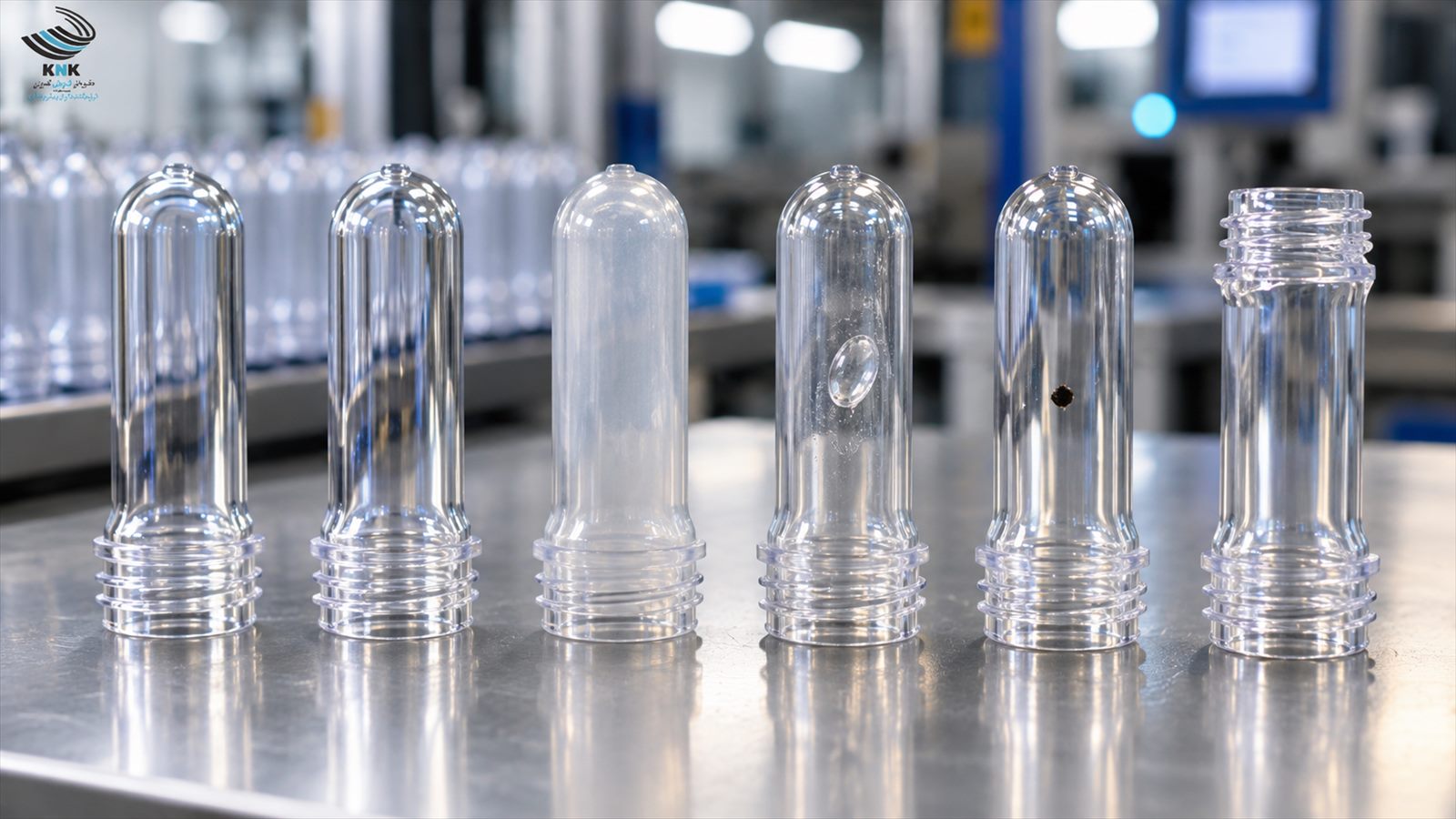
Common PET Preform Defects
Recognizing common defects is important because a relatively small preform problem may become more serious during bottle production.
Haze or Loss of Transparency
Unexpected cloudiness or haze should be investigated because it may be related to material or processing conditions.
Bubbles or Voids
Visible bubbles or voids can affect appearance and potentially indicate instability during manufacturing.
Yellowing or Color Change
Unintended discoloration may be associated with material degradation or unsuitable processing conditions.
Incomplete Neck Finish or Threads
Incomplete mold filling may result in defective threads or sealing surfaces, directly affecting closure performance.
Weight Variation
Unexpected differences in preform weight may indicate instability in the manufacturing process.
Black Specks and Contamination
Dark particles, foreign matter, and unmelted material are among the common defects that should be detected during inspection.
Gate Defects
Gate cavities, cracks, excessive gate length, or off-center gate conditions should be carefully evaluated.
Warpage and Deformation
A deformed preform may create problems during conveying, reheating, mold loading, or subsequent bottle production.
How Is a PET Preform Converted into a Bottle?
Once the preform has passed inspection, it can be converted into a finished PET bottle through stretch blow molding.
The main stages include:
- Reheating the preform
- Positioning it inside the bottle mold
- Axial stretching
- Blowing with compressed air
- Cooling and releasing the finished bottle
Heating profile and material distribution are particularly important during this process. An appropriate preform must work together with the blow-molding settings and bottle design to produce consistent results.
How Does Preform Quality Affect the Final PET Bottle?
A stable and properly designed preform can help produce bottles with more uniform wall thickness, better appearance, predictable mechanical performance, and lower production waste.
Poor preform quality, on the other hand, can contribute to deformation, weak areas in the bottle, sealing problems, inconsistent blowing behavior, or repeated production-line adjustments.
For this reason, the true quality of a preform should ultimately be considered in relation to the performance of the finished bottle.
Is a Lighter PET Preform Always Better?
No.
Light weighting is valuable only when required bottle performance is maintained.
Reducing preform weight without considering bottle design, production conditions, transportation requirements, and end-use performance may lead to unwanted consequences.
The correct objective is to achieve an efficient balance between material consumption, bottle strength, production stability, and packaging performance.
The Role of the Mold in PET Preform Quality
The mold is one of the most important components of the preform production process.
Its precision, surface condition, cooling performance, cavity consistency, and overall repeatability can influence the dimensional and visual quality of the finished preforms.
For multi-cavity molds, maintaining uniform performance across cavities is particularly important because high production capacity is valuable only when the resulting products remain consistent.
Packaging, Storage, and Transportation: Quality Continues After Production
Quality control does not end when a preform leaves the injection-molding machine.
Dust, contamination, physical damage, poor handling, and unsuitable transportation conditions can affect otherwise acceptable products.
Proper packaging, storage, and transportation are therefore part of the quality chain and should be considered when evaluating a preform supplier.
What Should Industrial Buyers Ask a PET Preform Manufacturer?
Industrial buyers should look beyond unit price.
Important questions include:
- What is the specified preform weight and tolerance?
- What neck-finish standard is used?
- Which colors are available?
- What bottle applications are recommended?
- How is dimensional consistency controlled?
- What quality-control procedures are applied?
- Can the manufacturer maintain continuous supply at the required volume?
- How are preforms packed and transported?
Providing information about the target bottle and blow-molding equipment can also help the manufacturer recommend a more appropriate product.
PET Preform Production at Khosh Noosh Kavir
Khosh Noosh Kavir (KNK) has been active in PET preform and bottle manufacturing since 2006 in the Abarkuh Industrial Estate.
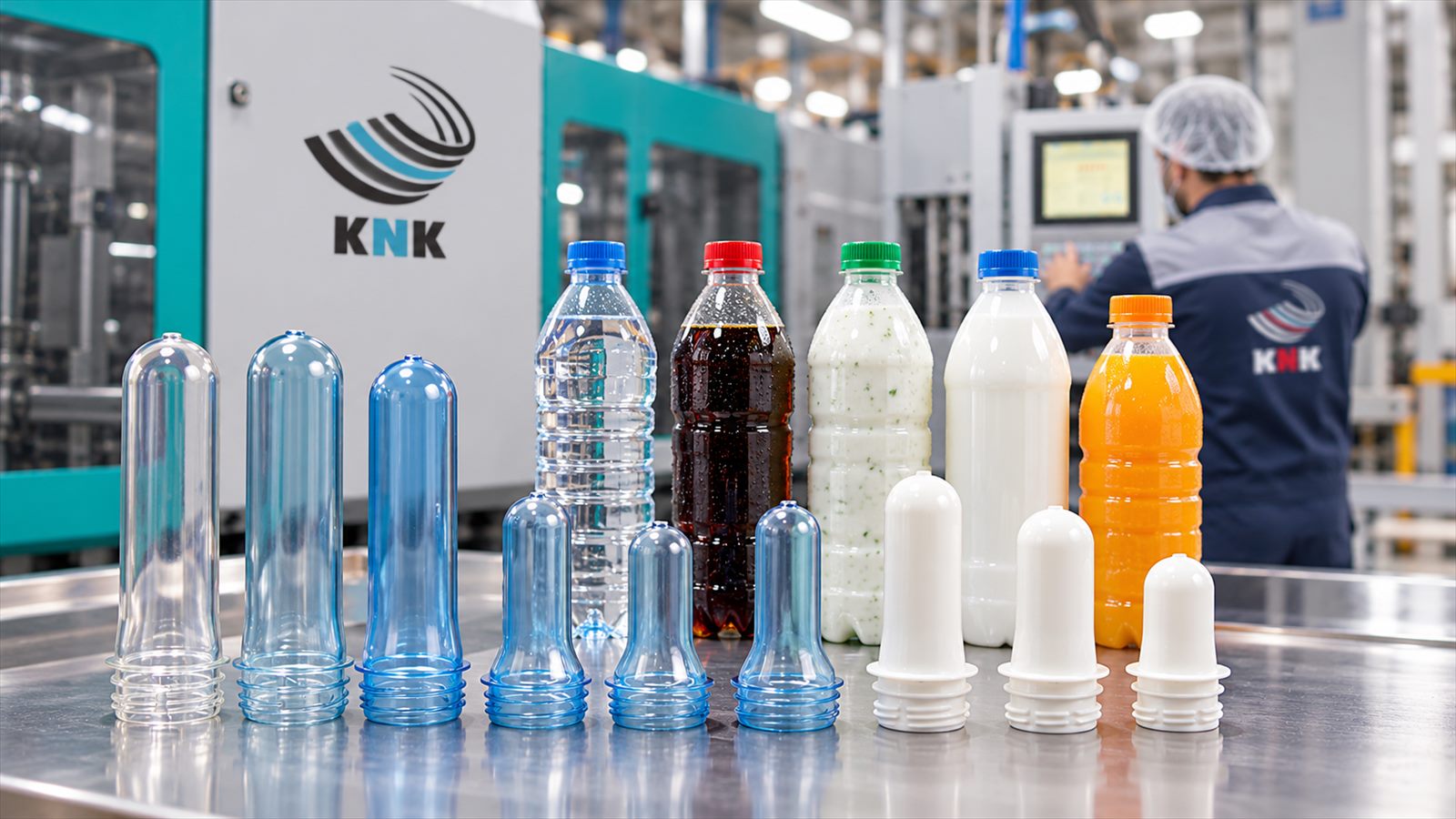
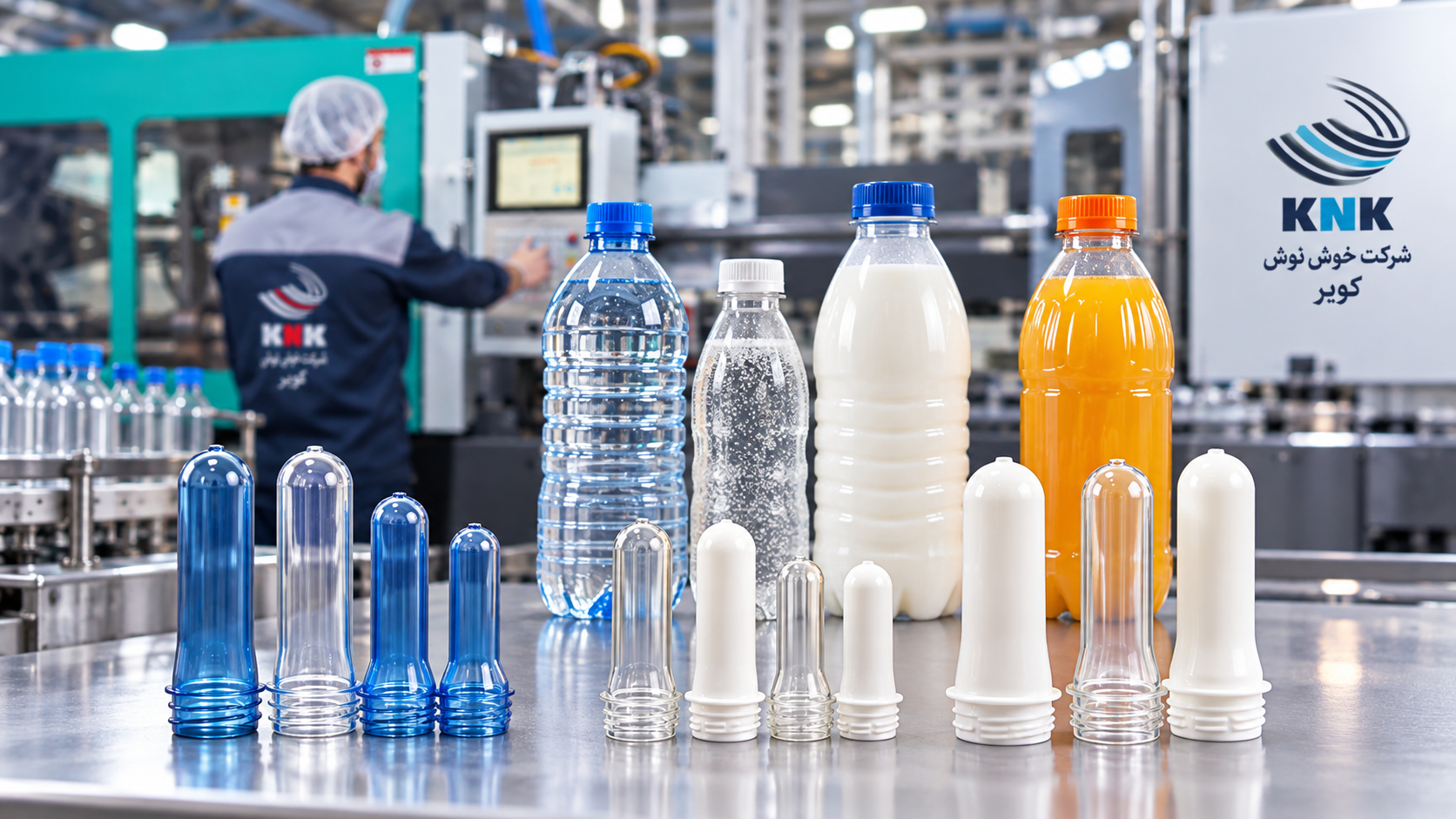
The company's product portfolio includes 28 mm, 30 mm, and 38 mm PET preform families for different food, beverage, and dairy packaging applications.
Khosh Noosh Kavir also emphasizes quality control, calibrated laboratory equipment, specialized personnel, and research and development activities as part of its production structure.
Its portfolio includes the 28 mm PCO 1810 preform for carbonated beverages, the 30 mm 29/25 preform for mineral water packaging, and the 38 mm 3 Star preform for applications such as milk and juice.
Frequently Asked Questions About PET Preform Production and Quality
How are PET preforms manufactured?
PET resin is prepared and dried, melted, injected into precision molds, cooled, inspected, and packaged. The preforms are later reheated and blow molded into finished bottles.
What are the most common PET preform defects?
Common defects include haze, bubbles, discoloration, black specks, incomplete molding, neck-finish defects, gate problems, weight variation, and deformation.
How is PET preform weight selected?
The appropriate weight depends on the final bottle volume, geometry, application, required strength, and blow-molding conditions.
What should PET preform quality control include?
Typical inspection criteria include weight, dimensions, neck finish, threads, appearance, transparency, color, injection gate, contamination, and dimensional stability.
Does reducing preform weight reduce bottle quality?
Not necessarily. Light weighting can be successful when supported by appropriate bottle design, process optimization, and performance testing.
Conclusion: Bottle Quality Starts with the Preform
A PET preform is much more than an intermediate step between resin and bottle. A significant part of packaging quality is already being determined during raw-material preparation, injection molding, mold design, dimensional control, defect inspection, storage, and transportation.
For industrial buyers, the key is not to select a preform based solely on price or weight. The most suitable product is one that is technically compatible with the bottle design, closure system, production line, and intended application, while maintaining consistent quality across repeated orders.
Bottle quality begins before the bottle even exists.
Photos