PET Preforms: A Comprehensive Guide to Selection
2026/09/26
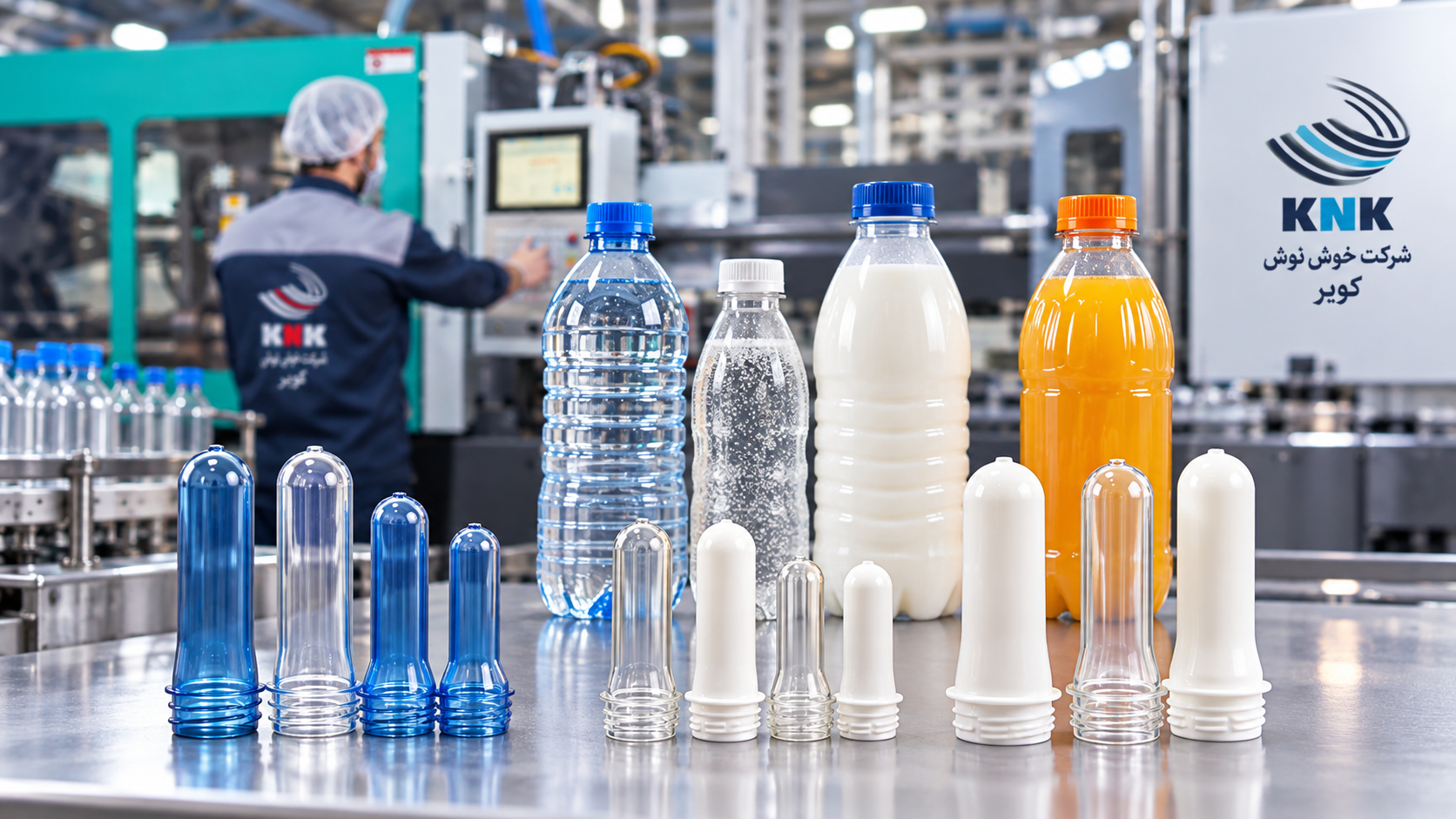
PET preforms are essential components in the production of plastic bottles for mineral water, carbonated beverages, dairy products, and fruit juices. Selecting the right PET preform requires careful consideration of neck diameter, weight, bottle capacity, closure compatibility, and production line specifications.
In the beverage packaging industry, the quality of the final bottle begins at a stage when the bottle has not yet taken shape. Before a container for mineral water, carbonated soft drinks, doogh, milk, or fruit juice acquires its familiar form, a small yet essential component called a preform is manufactured. A PET preform serves as the foundation for producing many of the plastic bottles commonly used in the food and beverage industries. Selecting the right preform can influence bottle strength, weight, appearance, neck finish, production line performance, and even the overall cost of packaging.
For a factory or manufacturing company, purchasing preforms involves much more than choosing a plastic component of a particular weight. The type of product to be packaged, the final bottle capacity, internal pressure, closure type, neck finish standard, color, preform weight, and operating conditions of the blow-molding machine all play a role in the selection process. Therefore, understanding the different types of PET preforms and their technical specifications before placing an order can support more informed decisions and help minimize errors throughout the production chain.
Khosh Noosh Kavir was established in 1385 (2006) in the Abarkuh Industrial Estate and specializes in manufacturing preforms and bottles. Its current product portfolio includes preforms with neck diameters of 28, 30, and 38 mm for various applications in the beverage and dairy industries. This comprehensive guide covers everything from the definition of a preform to selection criteria, factors affecting pricing, and essential considerations when purchasing PET preforms.
What Is a PET Preform, and What Role Does It Play in Bottle Manufacturing?
PET stands for Polyethylene Terephthalate, a lightweight, strong, and transparent polymer widely used in food and beverage packaging.
A preform is a component typically manufactured through an injection-molding process. Its appearance resembles a thick-walled test tube with the final neck finish and threads of the bottle already formed. While the preform's neck has its final shape from the beginning, its body is subsequently heated, stretched, and expanded using compressed air to form the finished bottle.
A PET preform can therefore be considered the intermediate stage between PET raw material and the finished bottle. It must be designed and manufactured so that the material is properly distributed throughout the bottle walls and base during the blow-molding process.
If the preform's weight, dimensions, geometry, or injection-molding quality are incompatible with its intended application, the blow-molding process may produce bottles with uneven wall thickness, insufficient strength, or an undesirable appearance.
This explains why technical specifications are just as important as price when purchasing preforms for industrial applications. A suitable preform must be compatible with the bottle mold, production machinery, closure standard, and the product to be packaged.
Why Is PET Widely Used in Beverage Packaging?
The widespread use of PET in the beverage industry is no coincidence.
Its combination of relatively low weight, suitable mechanical strength, transparency, and ability to be molded into bottles of various shapes and capacities has made it one of the most important materials in the packaging industry.
For manufacturers, the possibility of optimizing bottle weight is particularly important. Proper preform and bottle design can reduce raw material consumption without compromising the expected performance of the packaging.
In practical applications, however, lighter does not always mean better.
The weight of a preform must be selected according to the bottle's capacity, shape, internal pressure, transportation conditions, and the type of product it will contain.
Mineral water bottles have different technical requirements from carbonated beverage bottles. Similarly, milk and fruit juice packaging may require different neck finishes, colors, and other specifications.
For this reason, PET preform selection should be based on the intended application rather than simply choosing the lightest preform or the lowest available price.
From PET Granules to Finished Bottles: How Is a Preform Converted into a Bottle?
The bottle manufacturing process can be divided into two main stages.
In the first stage, PET raw materials are prepared and fed into an injection-molding machine, where they are formed into preforms.
During this process, the preform's neck, threads, and main body are manufactured.
Mold precision and process control are particularly important because dimensional variations or injection-molding defects may subsequently cause problems during blow molding or capping.
In the second stage, the preform is reheated in a bottle blow-molding machine to the appropriate processing temperature. It is then stretched and expanded using compressed air inside the bottle mold until it takes its final shape.
Uniform material distribution throughout the bottle walls and base is one of the essential factors affecting product quality.
Preform design, weight, heating conditions, and blowing parameters must be considered together. Consequently, a supplier with a diverse range of molds and extensive manufacturing experience can play an important role in helping customers select appropriate technical specifications.
Types of PET Preforms Based on Neck Diameter and Application
One of the simplest ways to classify preforms is by their neck diameter and neck finish standard.
However, the neck diameter is more than just a numerical measurement. The neck design and its corresponding standard must be compatible with the closure, the packaged product, and the production line.
Khosh Noosh Kavir's product portfolio includes three main preform categories with neck diameters of 28, 30, and 38 mm, addressing a substantial range of requirements in the beverage and dairy industries.
28 mm PET Preforms: Suitable for Carbonated Beverages
Khosh Noosh Kavir's 28 mm preforms feature a normal-neck design and comply with the PCO 1810 neck finish standard.
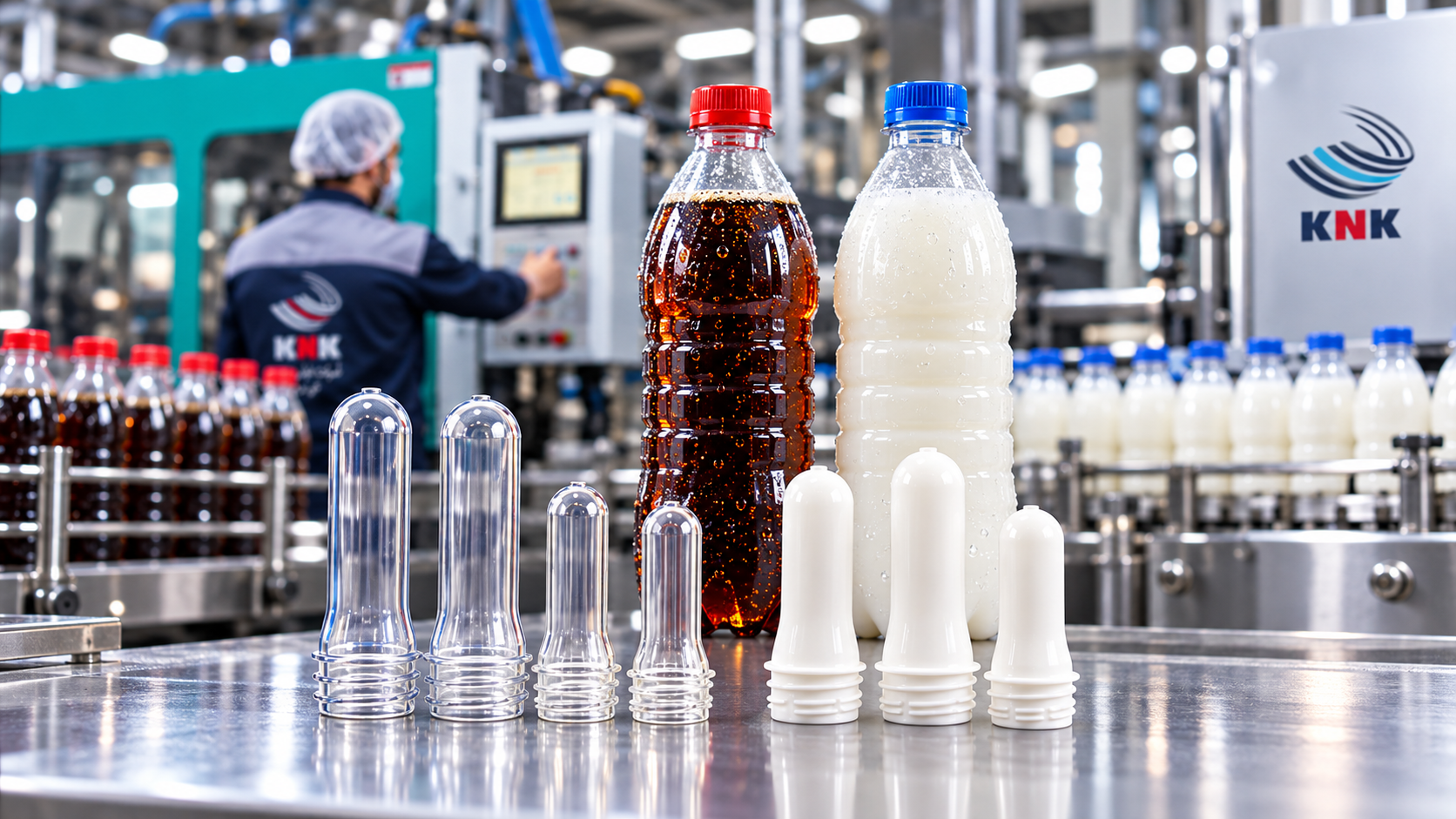
This product category is intended for bottles used to package carbonated beverages, including soft drinks and doogh.
According to the company's current product specifications, these preforms are manufactured in various weights and can be used to produce bottles of different capacities.
Internal bottle pressure is a particularly important consideration when packaging carbonated beverages.
Therefore, compatibility between the neck finish, closure, preform weight, bottle design, and the characteristics of the beverage must be carefully evaluated.
For these applications, selecting a preform based solely on its dimensions is insufficient. The technical specifications of the entire packaging system must be considered together.
30 mm PET Preforms: A Primary Option for Mineral Water Packaging
The 30 mm short-neck preform, featuring the 29/25 neck finish standard, is one of Khosh Noosh Kavir's most important products and is specifically designed for mineral water packaging.
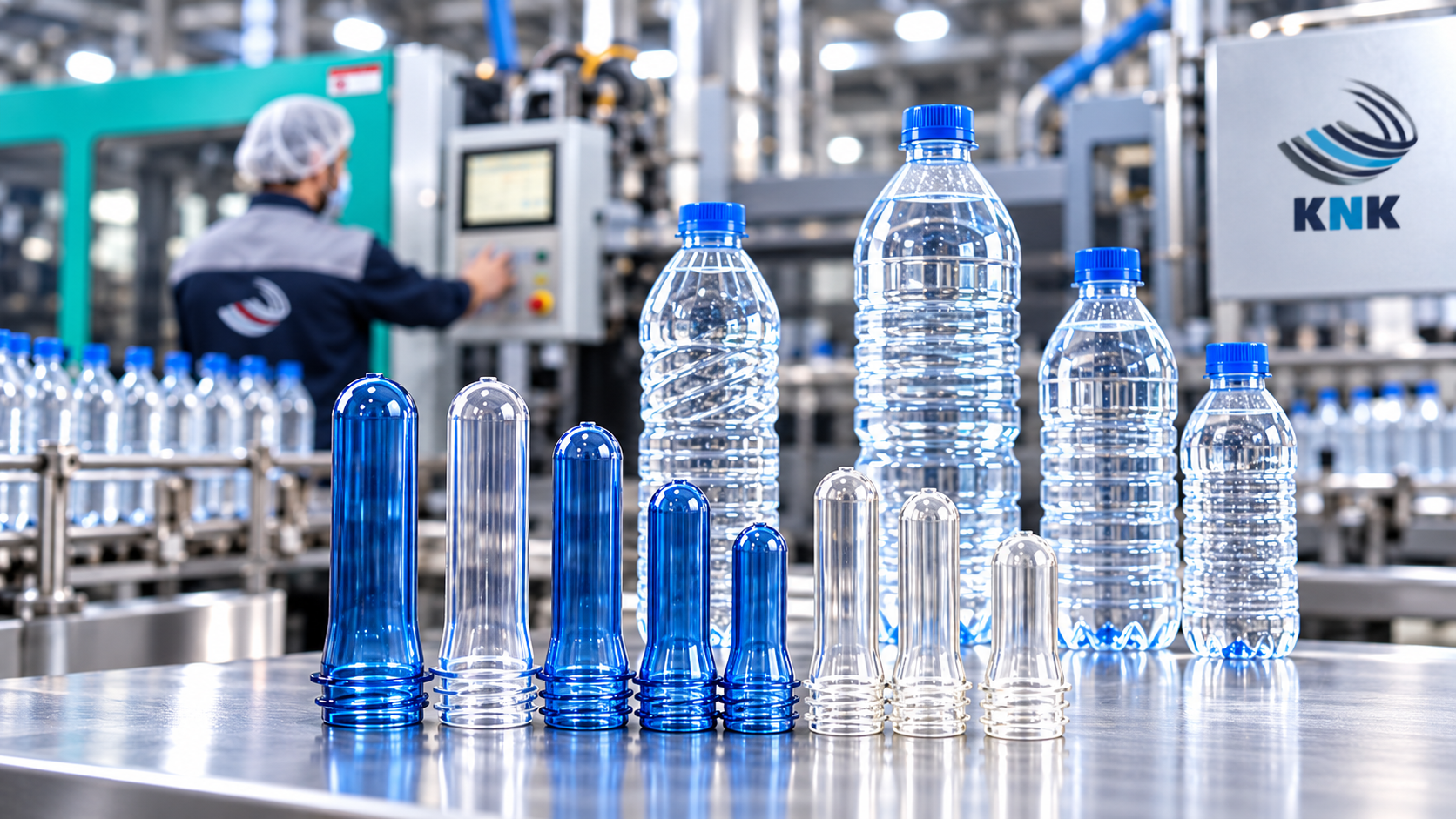
These preforms are available in weights ranging from 11 to 25 grams and are manufactured in transparent and blue colors.
The availability of different preform weights allows manufacturers to select a suitable option based on the required bottle capacity and intended design.
The mineral water market is generally characterized by high production volumes, a strong emphasis on consistent quality, and the need to control manufacturing costs.
Consequently, selecting PET preforms for this industry requires an appropriate balance between weight, bottle performance, and production line efficiency.
Reducing bottle weight is beneficial only when the finished bottle continues to meet the required standards for manufacturing, transportation, and consumer use.
38 mm PET Preforms: Designed for Milk and Fruit Juice Packaging
For applications such as milk and fruit juice packaging, a wider neck finish may be more suitable for the packaging format and consumer experience.
Khosh Noosh Kavir manufactures 38 mm short-neck preforms with the 3 Star neck finish standard for this product category.
These preforms occupy a distinct position in the company's current portfolio for the dairy and non-carbonated beverage industries.
When selecting this type of preform, manufacturers must consider not only the neck diameter but also the preform weight, color, final bottle shape, closure type, and filling conditions.
If the objective is to manufacture a particular bottle design for a brand, it is advisable to consider the finished bottle sample and the production line's operating conditions from the beginning of the selection process.
The Most Important Criteria for Selecting the Right Preform
Purchasing PET preforms for industrial applications becomes more reliable when the order specifications are clearly defined before requesting a quotation.
The most important selection criteria include:
- Product type: Mineral water, carbonated soft drinks, doogh, milk, and fruit juice do not have identical packaging requirements. The type of product is the primary factor in determining the appropriate preform category.
- Neck diameter and standard: The preform's neck finish must be compatible with the closure and production line equipment. Standards such as PCO 1810, 29/25, and 3 Star are used for specific applications.
- Preform weight: Preform weight is directly related to the finished bottle's capacity and design, its required strength, and raw material costs. A lighter preform is not necessarily suitable for every bottle.
- Final bottle capacity and shape: A particular preform may be suitable for producing bottles within a certain capacity range. However, bottle geometry and material distribution must also be evaluated.
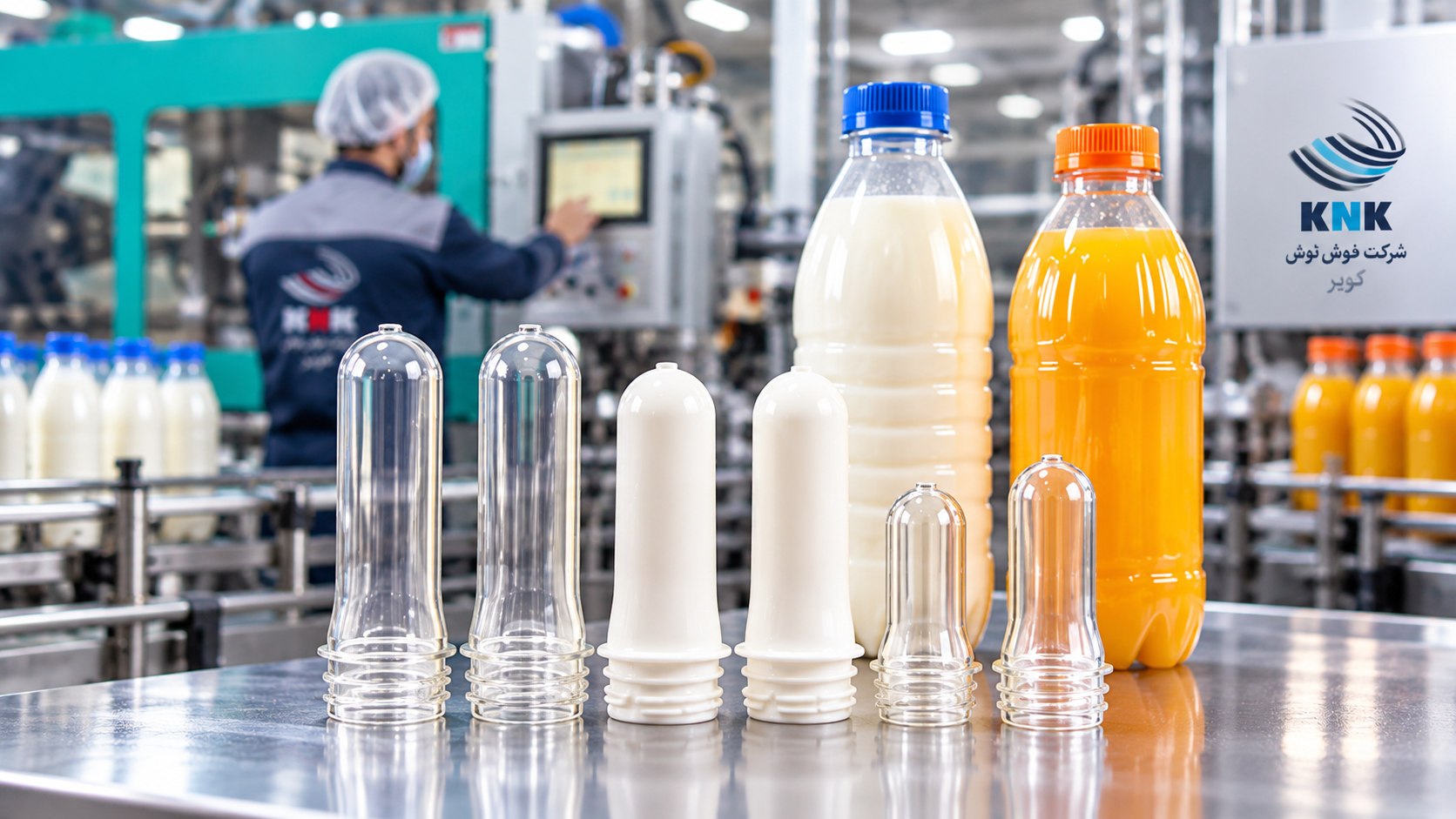
- Color and appearance: Transparent, blue, or milky-white preforms can be selected according to the packaged product and the desired packaging identity. The preform's visual quality also affects the final result.
- Compatibility with blow-molding equipment: Heating conditions, stretching, pressure, and bottle mold specifications must be compatible with the selected preform. For industrial orders, evaluating samples and technical specifications before purchasing in bulk is a reasonable approach.
Why Is Quality Control Important in PET Preform Manufacturing?
Although a preform is a semi-finished component, even a minor defect can become more significant and costly during the bottle manufacturing stage.
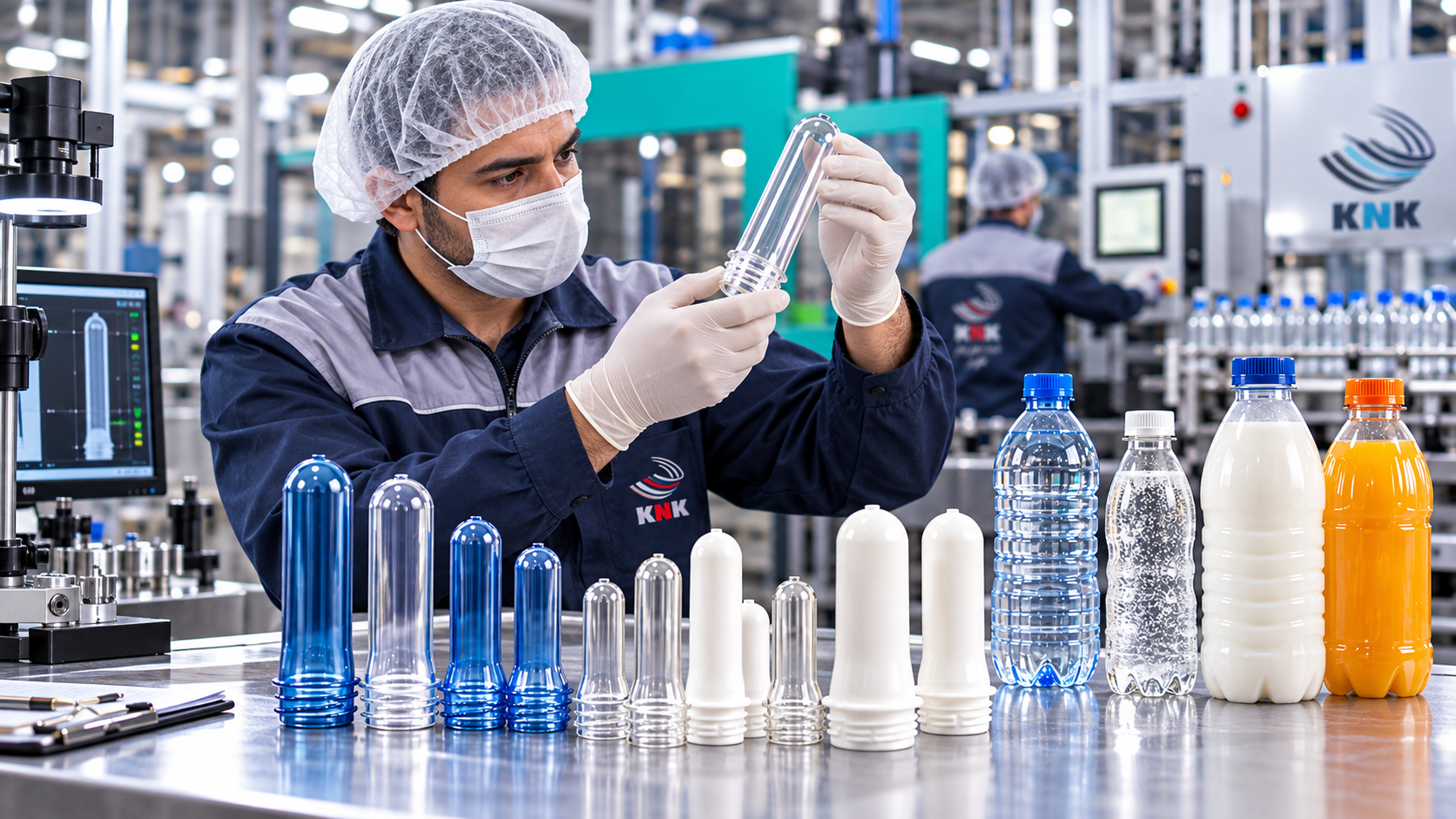
Weight consistency, neck dimensions, thread quality, surface appearance, injection gate condition, and dimensional stability are among the essential parameters evaluated during production.
Contamination, unwanted particles, or unusual variations in color and transparency may also indicate problems with the raw materials or manufacturing process.
In describing its quality control procedures, Khosh Noosh Kavir emphasizes the use of precise, calibrated laboratory equipment and specialized personnel.
For B2B customers, such procedures are particularly important. The objective is not simply to receive one shipment of defect-free products but to maintain consistent quality across successive orders.
A production line that repeatedly encounters noticeable variations in preform dimensions or performance may require additional adjustments and may experience increased waste or potential downtime.
From a professional manufacturing perspective, PET preform quality must be monitored throughout the entire process, from raw material selection and injection molding to packaging, storage, and transportation.
Even improper transportation can result in contamination or physical damage. Therefore, the supply chain itself forms an important part of overall product quality.
What Factors Affect PET Preform Prices?
The price of a preform is not a fixed figure independent of its technical specifications.
The first determining factor is the type and quantity of raw material used. Consequently, preform weight has a direct impact on manufacturing costs.
Neck finish type, color, order quantity, raw material market conditions, required technical specifications, and production and transportation costs can also influence the final price.
For this reason, comparing two quotations based solely on the price per preform can be misleading.
If a less expensive option results in increased production waste, more frequent equipment adjustments, inconsistent bottle quality, or higher material consumption in the finished product, its actual economic advantage may be reduced.
PET preform prices should therefore be evaluated alongside consistent quality, technical suitability, and the supplier's ability to provide a reliable, continuous supply.
For an accurate quotation, buyers should provide the sales department with information about the required neck finish, weight, color, order quantity, intended application, and, whenever possible, the specifications of the finished bottle.
Providing these details allows the supplier to prepare a quotation that more accurately reflects the actual order requirements.
Purchasing PET Preforms Directly from a Manufacturer: What Are the Benefits for Industrial Customers?
In the B2B market, purchasing preforms involves more than sourcing a single shipment.
Mineral water, beverage, and dairy manufacturers require reliable delivery schedules, consistent technical specifications, access to a variety of preform weights, and the ability to obtain technical consultation.
Purchasing directly from a manufacturer can simplify technical coordination, inventory inquiries, order planning, and quality follow-up.
Professional buyers should consider asking several important questions before finalizing a contract:
What preform weights are available? What is the neck finish standard? Which colors can be ordered? What bottle capacities and product applications is the preform recommended for? Can the manufacturer provide continuous production or supply at the required order volume? What are the packaging and transportation conditions?
Accurate answers to these questions provide considerably more value than a price list that lacks technical details.
Why Choose Khosh Noosh Kavir as Your PET Preform Supplier?
Khosh Noosh Kavir began its operations in 1385 (2006) in the Abarkuh Industrial Estate, focusing on the production of preforms and bottles for the food and dairy industries.
Its diverse production equipment and molds, the development of 28, 30, and 38 mm neck finish categories, and the manufacturing of various PET bottles have enabled the company to address a substantial range of packaging requirements in the beverage industry.
In addition to manufacturing, the company emphasizes quality control, research and development, and sourcing raw materials and production supplies from reputable suppliers.
According to the company's official information, its Research and Development (R&D) department studies market developments and new products. One of its key areas of activity is improving product quality and, where possible, optimizing product weight without compromising performance.
For industrial customers, this approach becomes particularly valuable when preform selection is viewed not as a one-time purchase but as an essential part of packaging design and supply chain stability.
Khosh Noosh Kavir also offers customers the option of coordinating product transportation.
To place an order or request a PET preform quotation, customers can provide the company's specialists with the required technical specifications, including neck finish type, preform weight, color, intended application, and order quantity. These details enable the team to evaluate suitable options for the customer's production line.
Frequently Asked Questions About PET Preforms
What Is the Difference Between a PET Preform and a PET Bottle?
A preform is a semi-finished component manufactured through injection molding and subsequently transformed into a finished bottle using a blow-molding machine.
The preform's neck and threads have their final shape from the beginning, while its body is stretched and expanded during the blowing process to form the finished bottle.
Which Preform Is Suitable for Mineral Water Packaging?
The appropriate choice depends on the bottle design and production line equipment.
However, Khosh Noosh Kavir specifically offers 30 mm short-neck preforms with the 29/25 neck finish standard for mineral water packaging. These preforms are available in different weights to accommodate various requirements.
What Are 28 mm PET Preforms Used For?
Khosh Noosh Kavir's 28 mm normal-neck preforms with the PCO 1810 standard are intended for carbonated beverages, including soft drinks and doogh.
Which Neck Diameter Is Suitable for Milk and Fruit Juice?
Khosh Noosh Kavir offers 38 mm short-neck preforms with the 3 Star neck finish standard for applications such as milk and fruit juice packaging.
The final specifications must be matched to the customer's bottle design, closure, and filling line.
Is a Lighter Preform Always a Better Choice?
No. Weight reduction is beneficial only when the finished bottle maintains its required strength, shape, production line performance, and expected characteristics during transportation and use.
Preform weight should be determined according to bottle design and intended application rather than simply minimizing raw material consumption.
What Information Is Required to Request a PET Preform Quotation?
The required neck finish type, preform weight, color, intended application, final bottle capacity, and order quantity are essential details.
Whenever possible, providing the specifications of the blow-molding equipment or a sample of the finished bottle can also help the supplier prepare a more accurate quotation.
The Right Preform: The Starting Point for a Reliable Bottle
A PET preform may appear to be a simple component at first glance, but a substantial part of the finished bottle's quality, cost, and performance is determined at this stage.
Selecting the appropriate neck finish, determining the correct preform weight, maintaining consistent injection-molding quality, and ensuring compatibility with blow-molding equipment can prevent numerous problems later in the production process.
There is no single solution suitable for mineral water, carbonated beverages, doogh, milk, and fruit juice.
Each application requires a specific combination of technical characteristics. The most appropriate selection is made when the preform, finished bottle, closure, and production conditions are evaluated together.
With its experience dating back to 1385 (2006) and its diverse range of PET preforms and bottles, Khosh Noosh Kavir is equipped to evaluate the requirements of customers in the food and beverage industries and offer options suited to their orders.
If you need more detailed information about selecting the right preform type, determining the appropriate weight, or obtaining a quotation, contact Khosh Noosh Kavir's specialists and provide them with your product specifications and required order quantity. The team can then evaluate the most suitable option for your production line.
Photos