What Is a PET Preform Neck Finish?
2026/10/04
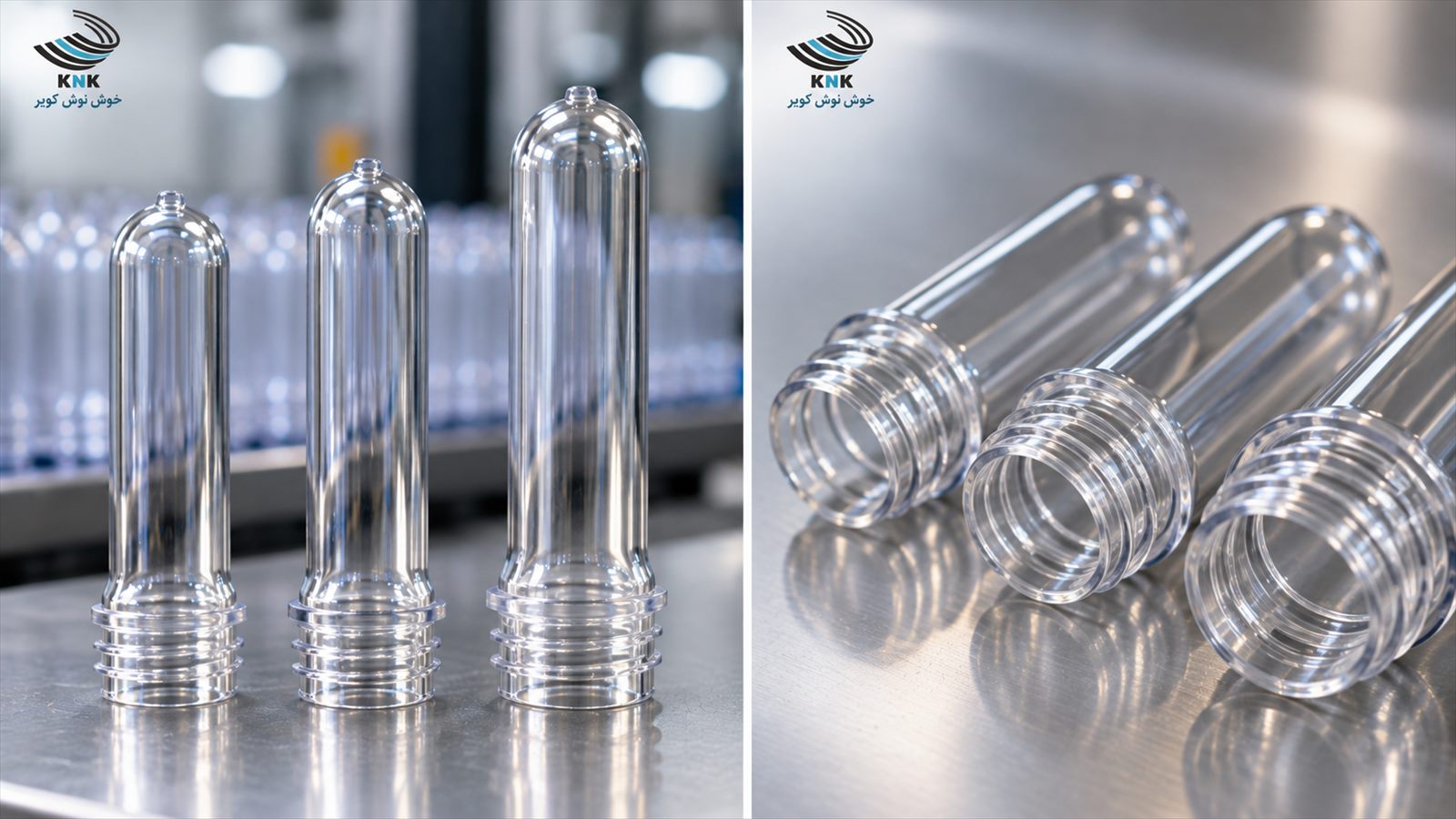
A PET preform neck is more than its nominal diameter: the neck finish defines how the preform, closure and packaging line work together. This guide compares PCO 1810, 29/25 and 3 Star in KNK’s portfolio and explains Short Neck vs Normal Neck for industrial buyers.
When industrial buyers evaluate a PET preform, weight, color and end use often receive most of the attention. Yet one of the most critical specifications sits at the top of the preform: the neck finish. This is the interface between the preform or bottle, the closure, and key parts of the packaging line. Two preforms may look similar in nominal diameter while having different thread geometry, sealing surfaces, neck height or closure compatibility.
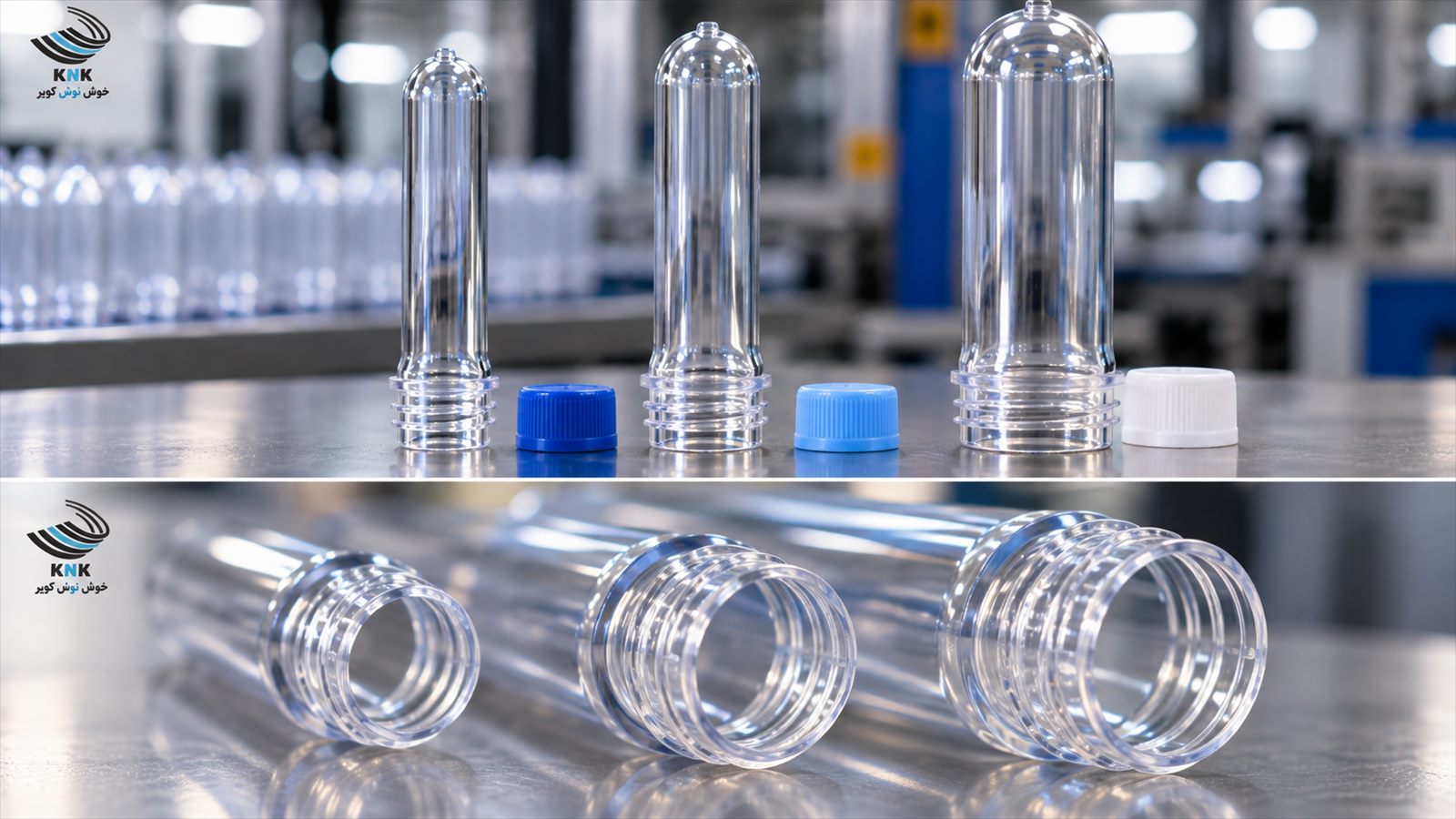
In Khosh Noosh Kavir’s current portfolio, three main families are identified with specific neck-finish standards: 28 mm PCO 1810, 30 mm 29/25, and 38 mm 3 Star. Understanding these differences helps purchasing and technical teams specify the correct system instead of ordering a preform only by diameter.
What exactly is a PET preform neck finish?
The term neck finish refers to the geometry of the bottle opening and neck area. It includes the nominal diameter, thread profile, sealing surface, support features and neck height. A value such as “28 mm” is therefore only part of the specification. The full neck-finish standard determines which closure geometry and line setup can be used reliably.
In practical terms, the neck finish is an engineering interface connecting three elements: the preform and finished bottle, the closure, and packaging-line equipment. If these elements are not matched, an otherwise acceptable preform can still create capping, sealing or handling problems.
Why does the neck finish matter for packaging performance?
Unlike the preform body, which is reheated and stretched during blow molding, the neck area largely retains the geometry created during injection molding. Dimensional consistency around the threads and sealing surfaces is therefore essential. The closure must engage correctly, the sealing interface must perform as intended, and the capping system must be set up for that neck-and-closure combination.
This is especially important for carbonated beverages, but it also matters in water, dairy and juice packaging. Neck-finish selection should be treated as a system decision rather than a simple diameter choice.
PCO 1810: the 28 mm Normal Neck option in KNK’s range
PCO 1810 is a recognized 28 mm neck-finish standard. In KNK’s product range, the 28 mm PCO 1810 preform is offered as a Normal Neck design for applications such as soft drinks, doogh and other carbonated beverages.
For carbonated applications, the preform and closure must work with the pressure requirements of the finished package. However, the neck standard alone does not guarantee bottle performance. Closure design, bottle geometry, thread quality, capping equipment and process conditions all need to be considered. For industrial purchasing, “28 mm preform” should not replace the exact PCO 1810 specification in the order.
What is the 29/25 neck finish?
KNK’s 30 mm preform family uses the 29/25 neck finish and is presented as a Short Neck solution for mineral-water packaging. This family is available in several weights and in clear and blue versions.
For a water bottling plant, the neck finish must be evaluated together with the closure, bottle mold, blow molder, filler and capper. A change that looks attractive at the preform level may create hidden costs if the rest of the packaging system is not compatible.
What is the 3 Star neck finish?
KNK’s 38 mm preform uses the 3 Star neck finish and a Short Neck structure for applications such as milk and juice packaging. A wider opening may suit certain dairy and beverage formats, but the final decision should still take filling conditions, closure design, product characteristics and shelf-life requirements into account.
The key point is that “38 mm” does not fully describe the interface. The complete neck finish and the selected closure must be compatible with the customer’s actual line.
Short Neck vs Normal Neck: what is the difference?
Short Neck and Normal Neck describe differences in the neck structure and height. In KNK’s current range, the 28 mm PCO 1810 preform is identified as Normal Neck, while the 30 mm 29/25 and 38 mm 3 Star families are identified as Short Neck.
What does Normal Neck mean?
In this article, Normal Neck refers to the configuration used for KNK’s 28 mm PCO 1810 family. The commercial term should never replace the exact neck-finish standard when preparing a technical purchase specification.
Why are Short Neck designs used?
In many packaging designs, reducing the neck section can contribute to material optimization and lower neck weight. However, Short Neck is not an automatic cost advantage. The closure, equipment and complete neck-finish system must be designed around that configuration.
Is Short Neck always lighter and more economical?
Not necessarily. Total packaging economics should include the preform, closure, bottle performance, equipment compatibility, line efficiency, scrap rate and supply continuity. A few grams saved in one component do not automatically make the complete system more economical.
This table describes KNK’s current product positioning and should not be interpreted as a universal rule for every preform manufacturer. A given neck standard may be used differently in other markets; the final choice must be validated against the closure, bottle and production line.
Can a preform be selected by diameter alone?
No. Terms such as “28 mm preform” or “30 mm preform” are useful starting points, but they are not complete purchasing specifications. Industrial orders should identify the exact neck finish, closure, preform weight, color, target bottle, and relevant blow-molding and filling conditions.
A common mistake is to assume that any closure with the same nominal diameter will fit any preform carrying that number. Nominal diameter is only one parameter; thread geometry and the complete neck finish determine true compatibility.
The relationship between the preform neck and bottle closure
The preform neck and closure should be treated as one packaging system. Thread engagement, sealing surfaces, tamper-evident features and application torque must work together. In carbonated packages this relationship is also linked to pressure retention; in non-carbonated products it remains important for sealing, safety and consumer use.
For new projects, testing the actual preform-and-closure combination on the customer’s equipment provides valuable confirmation. Catalog specifications are the starting point; production performance should be validated under real line conditions.
What should be checked before changing a neck-finish standard?
Changing a neck finish may affect much more than the preform itself. Technical teams should review:
- closure compatibility, thread geometry and sealing interface;
- capping heads, torque settings and bottle-handling equipment;
- blow mold setup and preform handling inside the blow molder;
- preform weight, geometry, reheating and blowing behavior;
- filling conditions, line speed and product-specific leak or pressure tests;
- reliable supply of both preforms and closures at the required production volume.
If the change is intended to reduce weight or cost, success should be measured at the complete package and line level—not only by the weight of an individual component.
Which neck sizes and standards are currently listed by KNK?
KNK’s current product pages identify three principal families with named standards: 28 mm PCO 1810, 30 mm 29/25, and 38 mm 3 Star. The website also lists a 45 mm preform at 175 g; its current product page does not specify a named neck-finish standard or application, so that family should be evaluated according to the technical requirements of the individual project.
For a technical quotation, buyers should provide more than the neck size: product type, bottle volume, preform weight, color, required quantity, closure sample, and—where available—blow-molder and filling-line information. This reduces specification risk and makes technical and commercial evaluation more accurate.
Frequently Asked Questions
What is PCO 1810 used for?
In KNK’s portfolio, the 28 mm PCO 1810 Normal Neck preform is listed for soft drinks, doogh and other carbonated beverages. Final compatibility should be confirmed with the closure and line.
Is the difference between 28 mm and 30 mm preforms only the diameter?
No. The neck-finish standard, neck structure, thread geometry, closure system and listed applications also differ. In KNK’s range, 28 mm is PCO 1810 Normal Neck, while 30 mm is 29/25 Short Neck.
What does 29/25 mean?
29/25 is the neck-finish designation used for KNK’s 30 mm mineral-water preform family. It should be specified together with weight, color and other order requirements.
What is the difference between Short Neck and Normal Neck?
The terms describe differences in neck structure and height, but they are not sufficient for compatibility. The exact neck-finish standard and closure are the critical specifications.
Will any 28 mm cap fit any 28 mm preform?
No. Nominal diameter alone does not guarantee compatibility; the thread profile, sealing surfaces and neck-finish standard must match the closure.
What is KNK’s 38 mm preform used for?
KNK lists its 38 mm Short Neck 3 Star preform for milk and juice packaging.
Conclusion: a preform neck is more than a number
A PET preform neck finish is one of the key interfaces between package design and real production-line performance. PCO 1810, 29/25 and 3 Star are not simply catalog labels; each must be evaluated as part of a complete system that includes the preform, closure, bottle and equipment.
For industrial buyers, the most reliable decision comes from defining the product, target bottle, closure, equipment and process requirements before ordering. KNK’s range can then be evaluated against the actual needs of the line rather than by nominal diameter alone.
Two preforms with a similar nominal diameter are not necessarily identical in neck finish, closure compatibility or application.
Photos