What Is the Difference Between a PET Preform and a PET Bottle?
2026/10/13
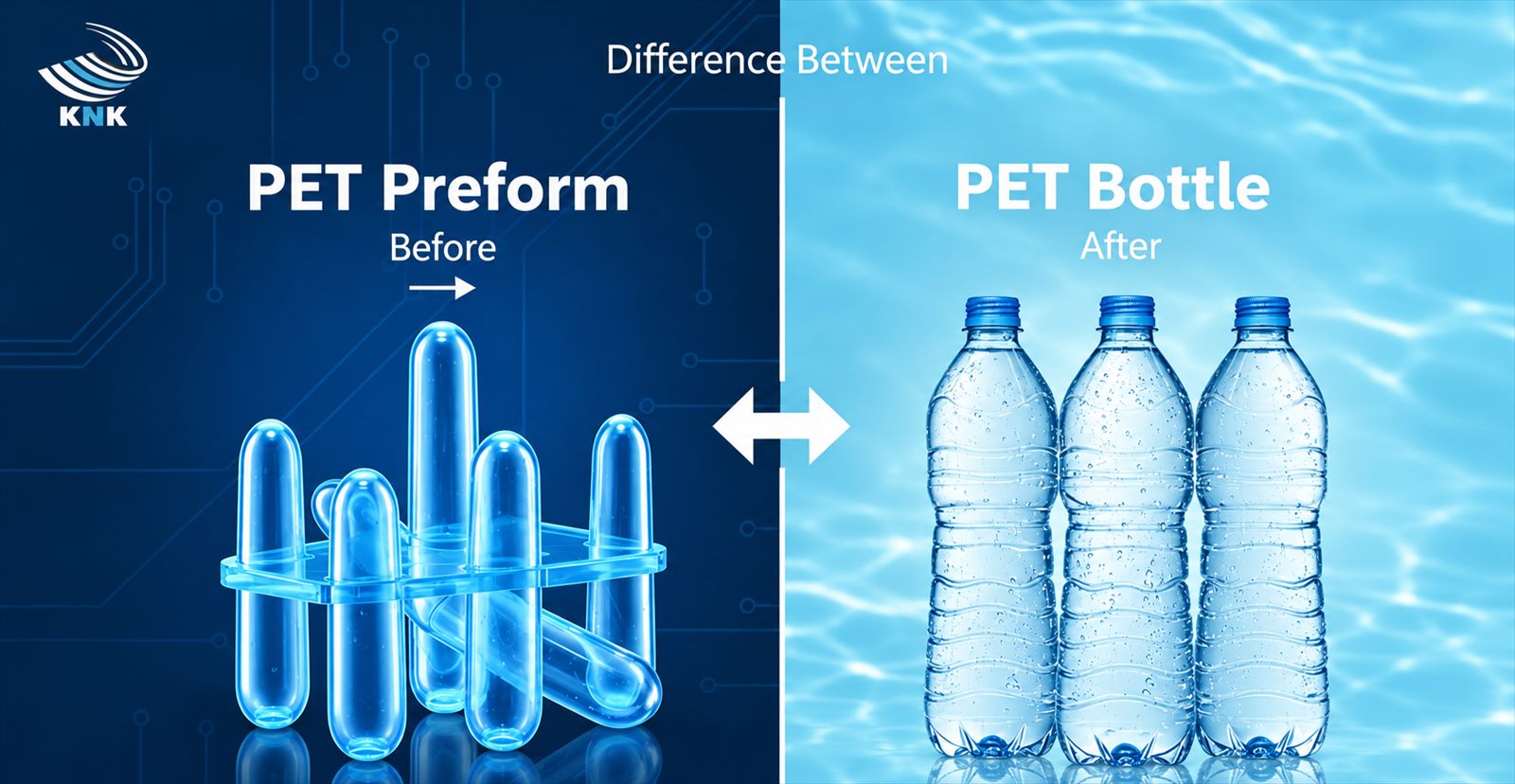
A PET preform is a compact semi-finished product that is reheated and stretch-blow-molded into a finished PET bottle. Choosing between preforms and ready-made bottles depends on production volume, blow-molding equipment, logistics, storage capacity, and total manufacturing cost.
PET Preform vs PET Bottle: What Is the Main Difference?
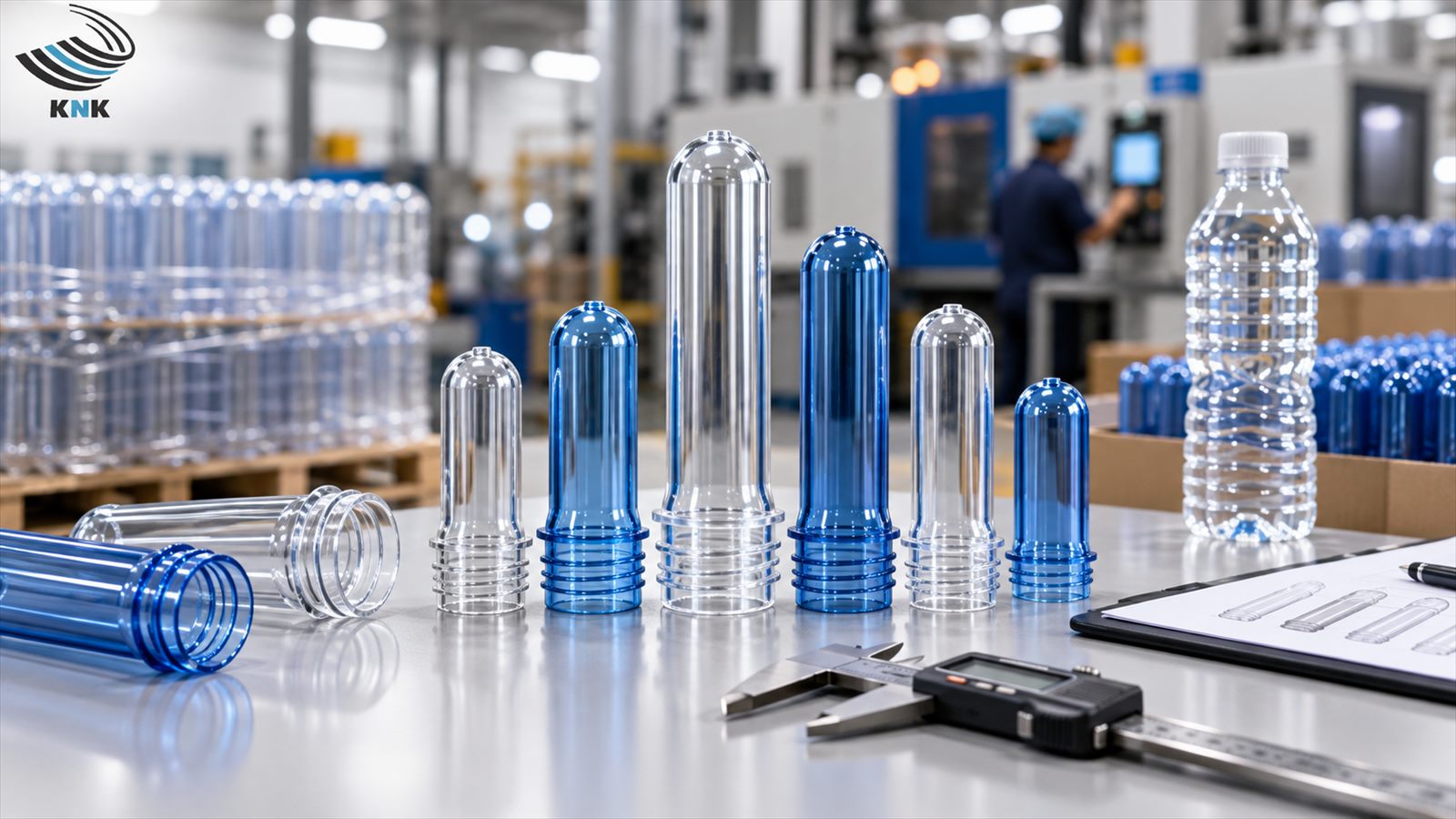
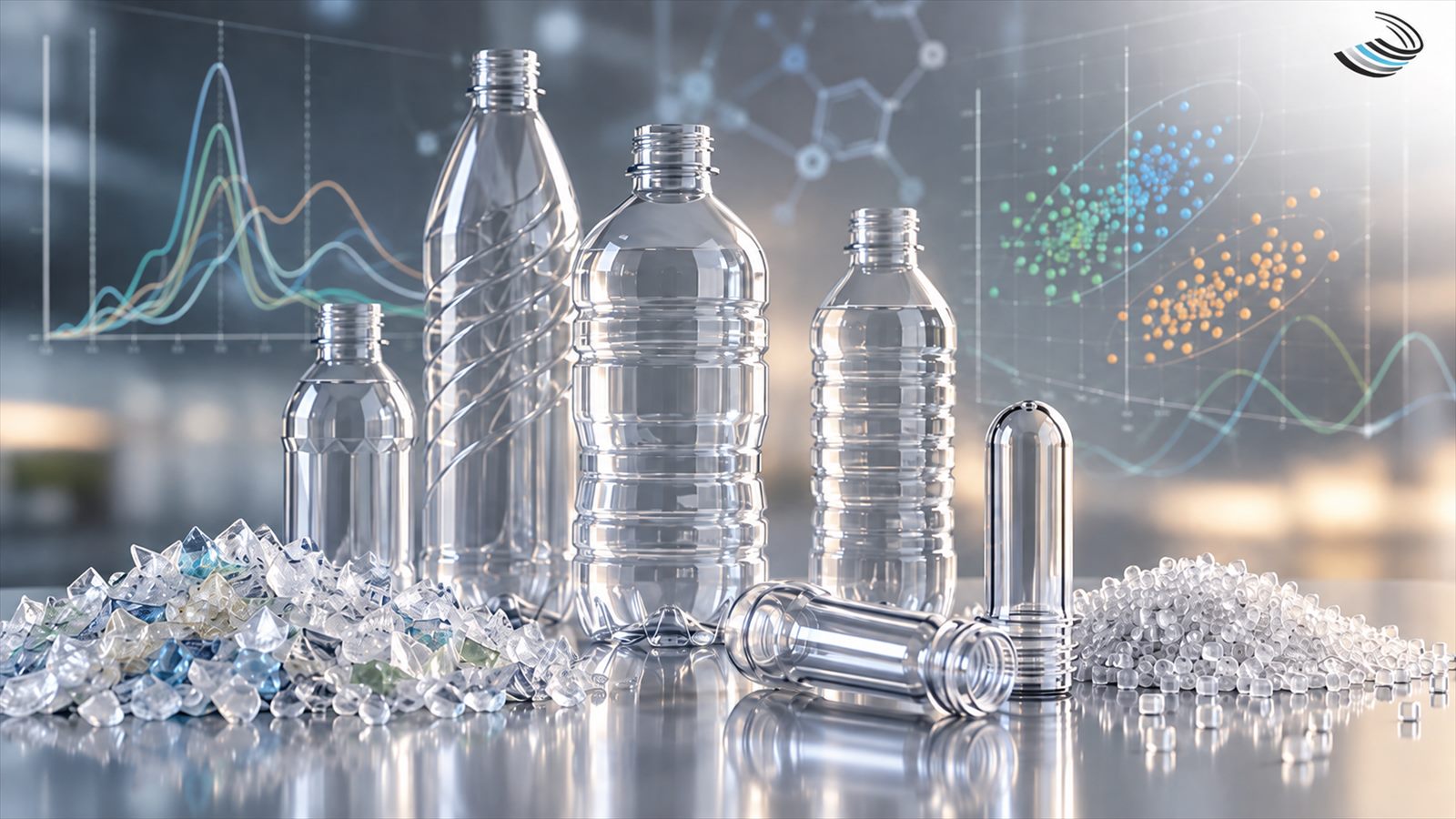
A PET preform and a PET bottle are not two unrelated products; they are two stages of the same manufacturing chain. A preform is a compact, thick-walled semi-finished component produced mainly through injection molding. Its neck finish and threads are already formed, while its body is later reheated, stretched, and blown inside a mold. A PET bottle is the finished hollow container produced from that preform and is ready to enter filling, capping, and packaging operations. In simple terms, the production sequence is: PET resin → PET preform → reheating and stretch blow molding → finished PET bottle.
How Is a PET Preform Converted into a Bottle?
During Reheat Stretch Blow Molding, the body of the preform is heated to the appropriate forming temperature and placed inside a bottle mold. It is then stretched longitudinally and expanded with compressed air until the polymer takes the shape of the mold. After cooling, the finished bottle is removed. The final result depends not only on preform quality but also on heating profile, stretching conditions, air pressure, mold design, and process control. Importantly, while the preform body undergoes substantial transformation, the neck finish and thread geometry largely retain the shape created during injection molding.
Storage and Transportation: One of the Biggest Practical Differences
One of the strongest logistical advantages of PET preforms is their compact size. Because a preform has not yet expanded into the final bottle shape, a much larger number of units can be stored or transported within the same volume. Empty finished bottles occupy considerably more space, which can increase warehousing and transportation requirements. However, this advantage must be viewed together with production infrastructure: a manufacturer buying preforms must also have access to suitable blow-molding equipment, molds, compressed-air systems, technical personnel, energy, and maintenance capabilities.
Should a Factory Buy PET Preforms or Ready-Made PET Bottles?
The right choice depends largely on the structure of the production line. Buying PET preforms may be more practical for manufacturers with their own blow-molding equipment, significant and continuous production volumes, and a strong need to optimize warehouse and transportation space. It can also allow bottle production to be coordinated closely with filling schedules. Ready-made PET bottles, on the other hand, may be more suitable for businesses without blow-molding equipment, operations with lower production volumes, or companies that prefer not to invest in bottle-blowing machinery and associated infrastructure.
Is Buying PET Preforms Always Cheaper?
Not necessarily. Comparing only the purchase price of a preform with the price of a finished bottle can be misleading. When using preforms, the total cost may include preform price, blow-molding energy, compressed air, equipment depreciation, molds, labor, maintenance, and production scrap. Ready-made bottles may eliminate the blowing stage but can create higher transportation and warehousing costs because of their greater volume. The correct comparison is therefore based on the total cost per usable bottle, not simply the unit purchase price of the preform or bottle.
Can Any PET Preform Be Used to Produce Any PET Bottle?
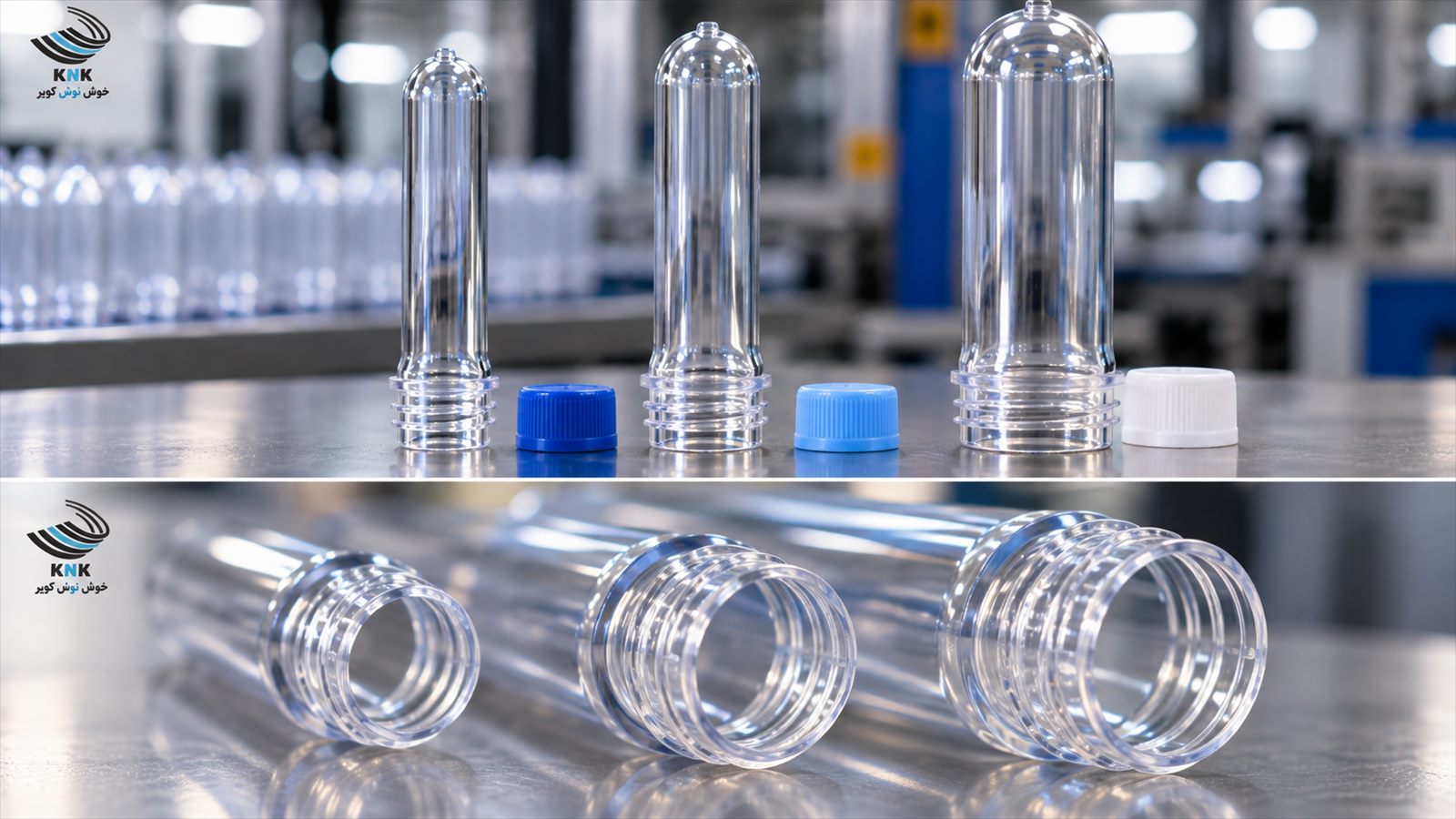
No. Preform weight, length, geometry, neck finish, bottle volume, bottle design, mold configuration, and blow-molding parameters must work as a compatible system. A preform selected for one bottle format may not perform properly in a significantly different bottle. Neck finish is particularly important because it determines compatibility with the closure and remains essentially unchanged during bottle blowing. In Khosh Noosh Kavir's current portfolio, for example, the 30 mm 29/25 family is positioned for mineral-water packaging, 28 mm PCO 1810 for applications such as soft drinks and carbonated doogh, and 38 mm 3 Star for applications including milk and juice.
Conclusion: The Right Choice Depends on the Production System
The difference between a PET preform and a PET bottle goes far beyond their physical appearance. A preform provides major advantages in compact storage and transportation but requires blow-molding infrastructure and process control. A ready-made bottle requires more logistical space but arrives in its final shape and eliminates the bottle-blowing stage for the customer.
For manufacturers, the best decision should consider production volume, available equipment, warehouse capacity, transportation costs, energy use, labor, bottle design, and long-term supply requirements together. Khosh Noosh Kavir (KNK) manufactures both PET preforms and PET bottles, allowing industrial customers to evaluate the option that better matches their packaging and production requirements.
PET preforms and PET bottles are not competing products; they are two stages of the same packaging chain. The right choice depends on where your production line is positioned within that chain.