Wholesale PET Preform Buying Guide
2026/10/12
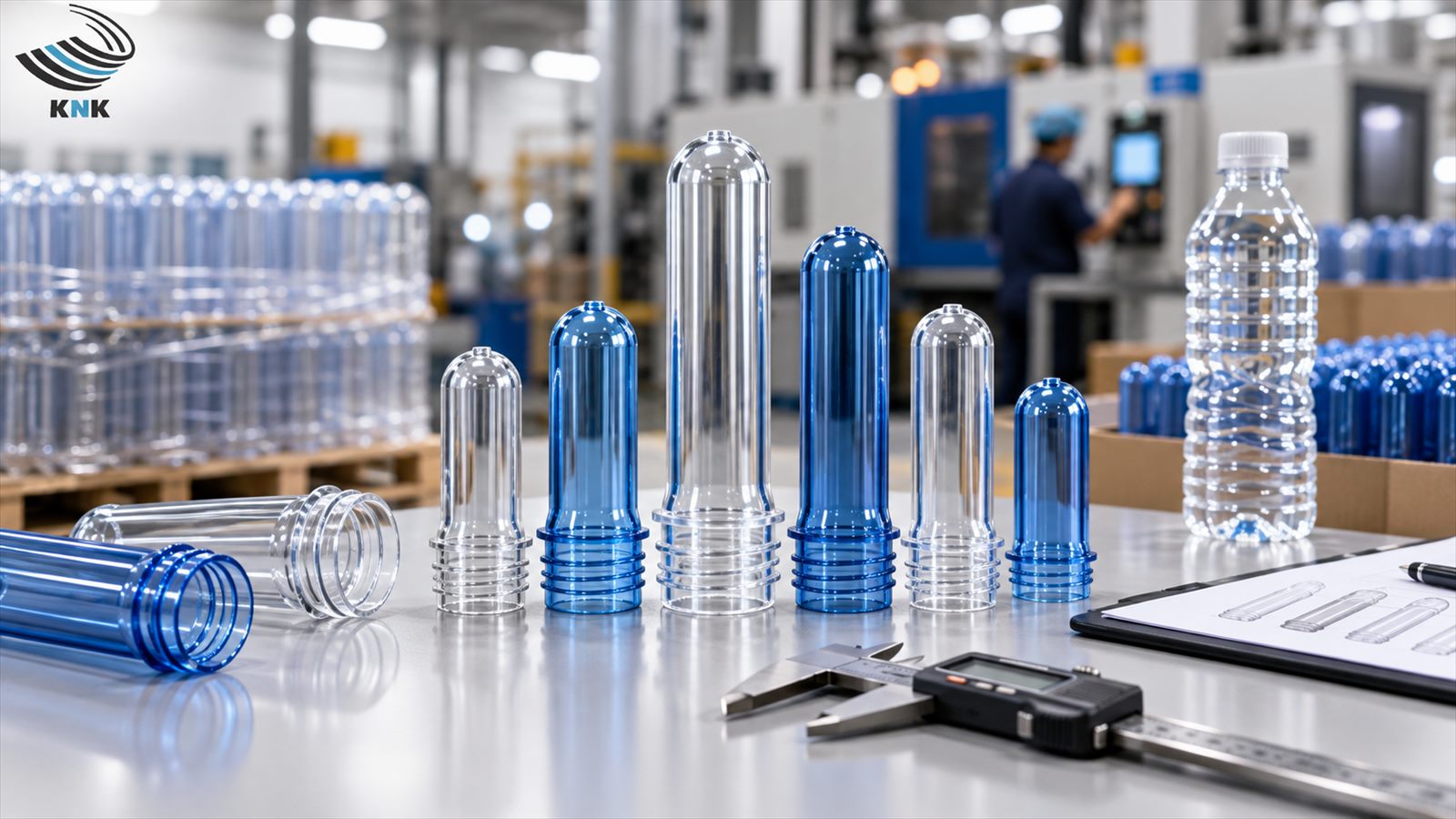
The lowest PET preform price does not always mean the lowest production cost; consistency, technical compatibility, supply reliability, and line performance matter just as much. This guide explains what to prepare before requesting a quotation, how to evaluate a manufacturer, and how to reduce risk in bulk PET preform purchasing.
In industrial purchasing, a low-priced preform is not necessarily an economical preform.
The difference becomes clear when thousands or millions of units enter a production line and even small variations in weight, dimensions, neck finish, threads, or blow-molding behavior begin to affect output, scrap rates, bottle quality, and production stability.
For this reason, buying PET preforms in bulk should not begin with a single question: “What is the price per piece?”
A professional purchasing process begins by defining the product accurately—its neck finish, weight, color, intended application, bottle volume, closure system, and required quantity—and then evaluating whether the manufacturer can deliver that specification consistently.
This guide approaches wholesale PET preform purchasing from the perspective of purchasing managers, production teams, and industrial bottlers.
How Is Wholesale PET Preform Purchasing Different?
A small purchase may be evaluated mainly by appearance and unit price. Industrial sourcing requires a broader perspective.
A factory that depends on the same preform for weeks or months needs confidence that future batches will remain consistent with the approved sample.
The key questions therefore include:
Can the supplier consistently meet the required volume?
Will weight and dimensional tolerances remain stable between batches?
Is the neck finish compatible with the closure and production equipment?
How are products packed and transported?
Is technical support available when adjustments or troubleshooting are required?
Wholesale preform purchasing is therefore part of production and supply-chain management, not simply a commodity purchase.
What Information Should You Prepare Before Requesting a PET Preform Quotation?
One of the most common reasons for inaccurate quotations is incomplete product information.
Requests such as “I need a 30 mm preform” or “What is your 28 mm preform price?” do not provide enough information for an accurate industrial quotation.
Before contacting a supplier, define the following:
- end-product type;
- neck diameter and neck-finish standard;
- required preform weight;
- color;
- target bottle volume and design;
- estimated order quantity;
- closure type;
- relevant blow-molding equipment specifications;
- delivery destination and logistics requirements.
The more complete the specification, the easier it becomes for the manufacturer to recommend a technically appropriate product and provide a meaningful quotation.
What Determines PET Preform Price?
PET preform price is influenced by several factors and should not be treated as a fixed number independent of technical specifications.
PET Resin Cost
PET resin represents a significant part of production cost. Changes in raw-material markets can therefore affect preform pricing over time.
Preform Weight
Weight directly affects material consumption.
Two preforms with the same nominal neck diameter but different gram weights will not normally have the same manufacturing cost.
However, lighter is not automatically better. The correct weight must suit the bottle volume, geometry, application, transportation requirements, and blow-molding process.
Neck-Finish Standard
A preform is not fully specified by terms such as 28 mm, 30 mm, or 38 mm.
The complete neck finish, including thread geometry and sealing interface, is also important.
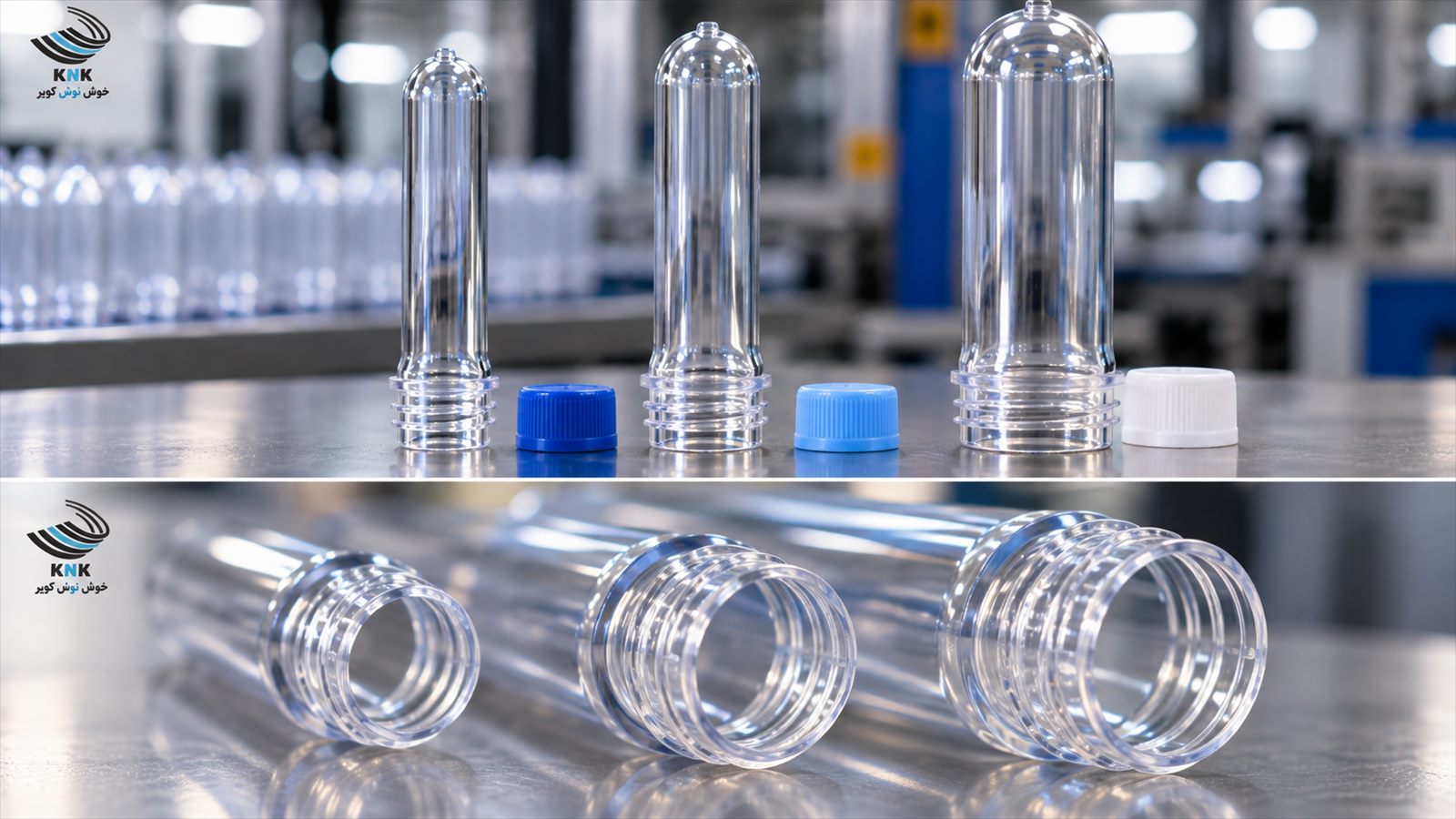
Within the Khosh Noosh Kavir portfolio, for example, the 28 mm family includes PCO 1810, the 30 mm family uses 29/25, and the 38 mm family includes the 3 Star standard.
For professional purchasing, the exact neck-finish specification should therefore be included in the quotation request.
Color and Product Specifications
Color and other manufacturing requirements may also affect production conditions and final pricing.
Order Volume and Logistics
Order quantity, delivery schedule, packaging, transportation, and supply arrangements all contribute to the commercial structure of an industrial order.
Therefore, two prices cannot be compared properly unless the underlying product specifications are also compared.
The Cheapest Preform May Not Have the Lowest Real Cost
This is one of the most important principles in industrial purchasing.
Imagine that a lower-priced preform causes greater variation during blow molding, higher scrap rates, more frequent machine adjustments, or inconsistent bottle performance.
The initial saving may quickly disappear.
The real cost can include:
purchase price + scrap + production downtime + energy consumption + rejected bottles + quality variation + replacement supply costs
This broader approach is closely related to the concept of Total Cost of Ownership.
Instead of asking only, “Which supplier has the lowest unit price?”, industrial buyers should also ask:
Which product provides the most stable and predictable overall production cost?
Why Does Quality Consistency Matter in Bulk Orders?
A good sample is useful, but it is not enough.
For an industrial buyer, supplier quality is demonstrated when the approved performance can be reproduced across large quantities and repeated orders.
Important consistency criteria include:
- preform weight;
- critical dimensions;
- neck finish and threads;
- appearance and color;
- dimensional stability;
- predictable behavior during blow molding.
If operators must repeatedly change machine settings whenever a new shipment arrives, the issue is no longer limited to individual preform quality. It affects the stability of the entire production process.
This is why batch-to-batch consistency should be an important criterion when selecting a PET preform supplier.
How Should You Evaluate a PET Preform Manufacturer?
A professional supplier should be evaluated on more than its price list.
Relevant criteria include manufacturing experience, product range, quality-control systems, technical capabilities, production capacity, order planning, packaging, transportation, and the ability to support long-term industrial customers.
A reliable PET preform manufacturer should also be able to communicate product specifications clearly.
For beverage and food manufacturers, a supplier that can maintain predictable quality and supply over time may create greater value than a one-time source offering a slightly lower price.
What Are the Benefits of Buying Directly from a Manufacturer?
Direct contact with the manufacturing facility can simplify technical communication.
If there is a question regarding weight, color, neck finish, packaging, or processing behavior, the issue can often be discussed more directly with the commercial or technical team.
For recurring orders, direct sourcing may also improve production planning and delivery coordination.
However, it would be inaccurate to claim that buying directly from a factory is always cheaper. Final cost depends on order quantity, transportation, market conditions, and the commercial model.
The key benefits of direct purchasing are often technical transparency, clearer communication, and better potential for long-term supply planning.
How Should PET Preform Samples Be Evaluated Before a Bulk Order?
When changing suppliers or introducing a new specification, sample testing can significantly reduce purchasing risk.
Visual inspection is only the first step.
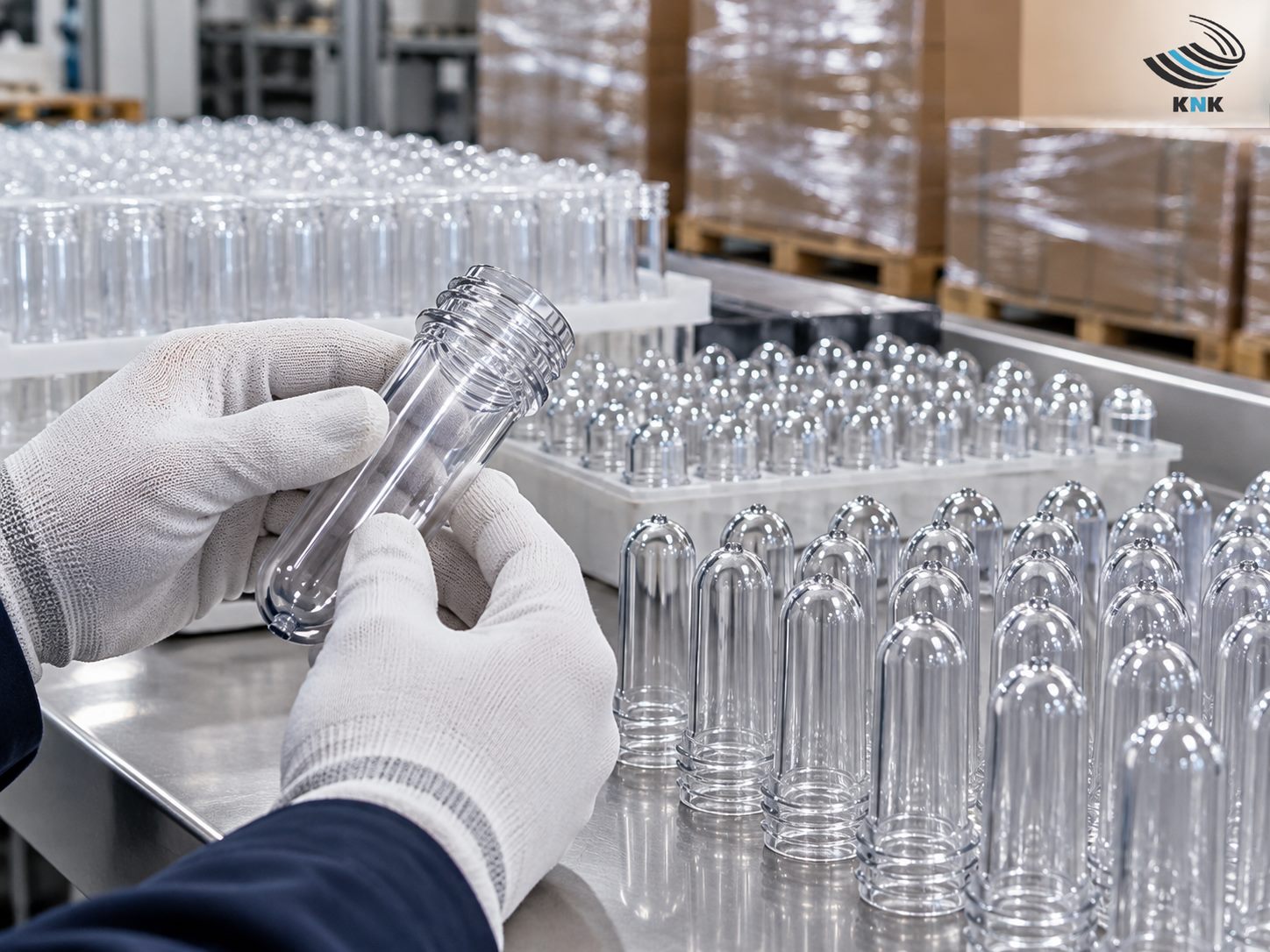
Preform weight and dimensions should be checked against the required specification. The neck finish should be tested with the intended closure, and where possible, the sample should be evaluated on the actual blow-molding equipment.
The finished bottle should then be assessed for appearance, shape stability, material distribution, and closure performance.
If the final bottle will experience internal pressure, demanding transportation conditions, or a specific filling process, testing should reflect those actual operating conditions.
A real production-line trial provides far more useful information than judging a preform by appearance alone.
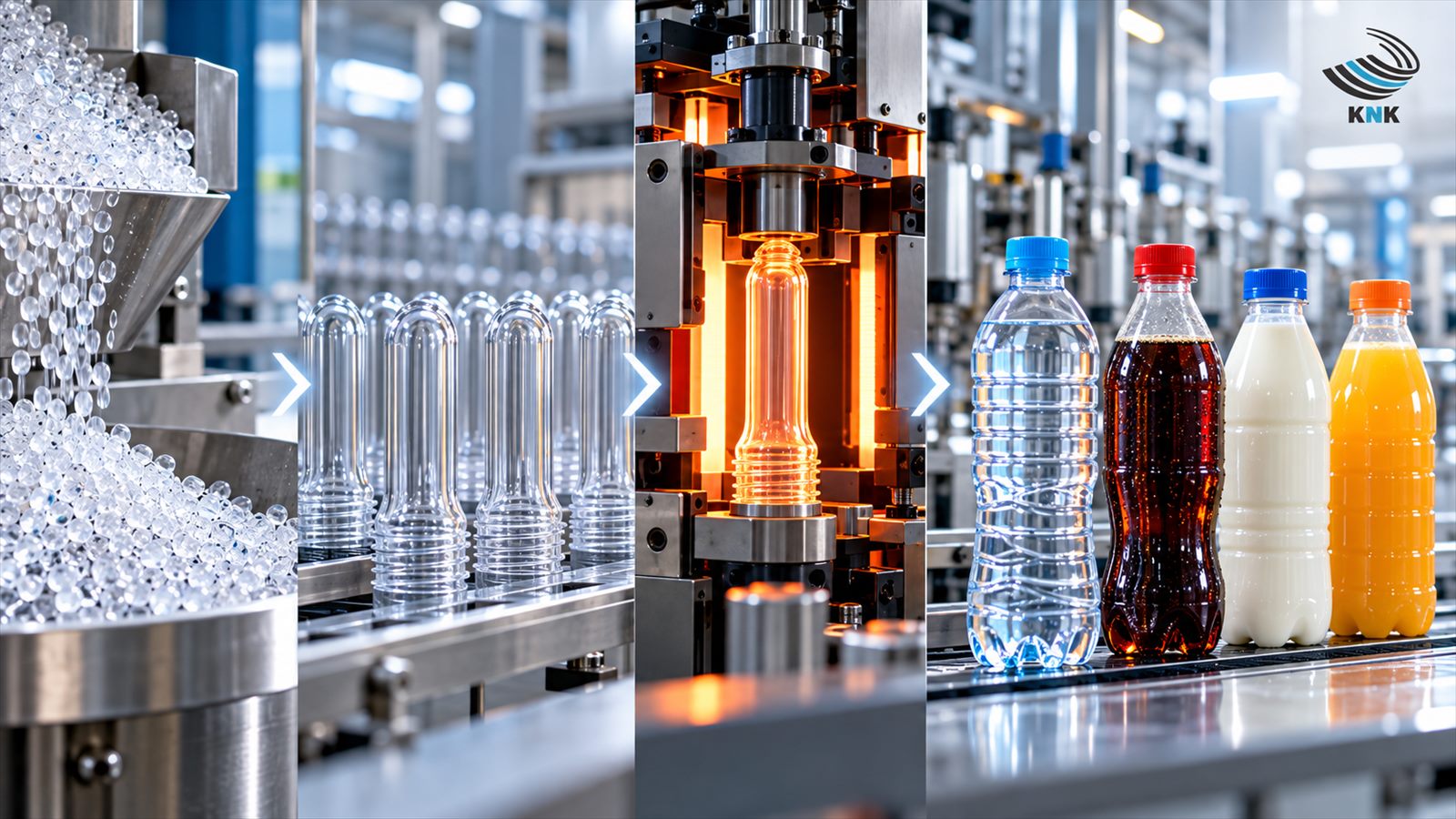
PET Preforms for Water, Carbonated Drinks, Milk, and Juice Are Not the Same
The final product influences preform selection.
Within the current Khosh Noosh Kavir product portfolio:
- 30 mm 29/25 preforms are positioned for mineral-water packaging;
- 28 mm PCO 1810 preforms are used for applications such as soft drinks, doogh, and carbonated beverages;
- 38 mm Star-3 preforms are offered for applications such as milk and juice.
However, beverage type alone is not enough to complete the selection.
Bottle volume, bottle geometry, preform weight, closure, blow-molding equipment, and filling conditions should also be considered.
Common Mistakes in Wholesale PET Preform Purchasing
Many purchasing problems can be prevented before the order is confirmed.
Common mistakes include:
- selecting only by lowest price;
- ordering only by neck diameter without specifying the neck finish;
- ignoring closure compatibility;
- failing to define the required preform weight;
- skipping production-line sample testing;
- overlooking the supplier's long-term production capacity;
- selecting a preform without considering the finished bottle.
For recurring B2B orders, it is also good practice to record the approved specification in writing so that future deliveries can be evaluated against the same reference.
What Should a PET Preform Price Enquiry Include?
A professional quotation request does not need to be long. It simply needs to be specific.
For example:
30 mm 29/25 PET preform, required weight, clear color, intended for a specified mineral-water bottle volume, estimated order quantity, and delivery location.
If closure samples, bottle drawings, mold information, or blow-molder specifications are relevant, providing them can further improve the accuracy of the technical evaluation.
This is far more effective than simply requesting “the PET preform price.”
Wholesale PET Preforms from Khosh Noosh Kavir
Khosh Noosh Kavir (KNK) has been active since 2006 in the Abarkuh Industrial Estate, producing PET preforms and PET bottles for the food, beverage, and dairy industries.
Its product portfolio includes multiple preform families with different neck standards, weights, and applications.
Quality control, laboratory equipment, technical expertise, and research and development are part of the company's manufacturing approach.
For industrial customers, factors such as neck finish, weight, color, application, order quantity, and delivery requirements are important when defining an order.
For a PET preform quotation, customers can provide the required neck finish, weight, color, application, bottle volume, and estimated order quantity to the Khosh Noosh Kavir team for a more accurate technical and commercial review.
Frequently Asked Questions About PET Preform Purchasing
How is PET preform price calculated?
Price can depend on PET resin cost, preform weight, neck finish, color, production requirements, order quantity, packaging, and transportation.
What information is needed for a PET preform quotation?
At minimum, specify the neck finish, weight, color, application, bottle volume, required quantity, and delivery destination.
Is buying directly from a factory always cheaper?
Not necessarily. Direct sourcing can improve technical communication and supply planning, but final pricing depends on several commercial and logistical factors.
What PET preform weight is suitable for my bottle?
There is no universal weight for every bottle. Bottle volume, geometry, end use, transportation conditions, and blow-molding equipment should all be considered.
Are all 28 mm PET preforms the same?
No. Nominal neck diameter alone does not define a preform. Neck finish, thread geometry, weight, color, and overall design may differ.
Should samples be tested before a bulk order?
For a new specification or supplier, production-line sample testing is a useful way to reduce technical and purchasing risk.
How do I choose a reliable PET preform supplier?
Evaluate manufacturing experience, quality consistency, technical specifications, production capacity, quality control, packaging, logistics, support, and the ability to maintain supply over time.
Conclusion: Price Is Only One Part of a Wholesale PET Preform Purchase
Professional wholesale PET preform purchasing requires more than comparing unit prices.
Technical compatibility, quality consistency, process performance, and reliable supply all contribute to the real value of an industrial purchase.
Before placing an order, define the specification clearly:
neck finish, weight, color, application, bottle volume, closure requirements, and order quantity.
Then evaluate both the sample and the supplier's ability to reproduce that quality consistently.
For technical review or a PET preform quotation, industrial customers can provide their product specifications and expected quantity to Khosh Noosh Kavir so that the appropriate preform options can be evaluated for their production requirements.
In industrial PET preform purchasing, the best price creates value only when it is supported by consistent quality, technical compatibility, and reliable supply.
Photos